Key Takeaways: Ketamine For Alcohol Use Disorder
- Ketamine is studied as a support alongside therapy and comprehensive addiction care, not a replacement for established treatment or a detox protocol
- Clinical trials show reduced drinking and longer abstinence, particularly when infusions are paired with psychotherapy. Studies are still small and not yet definitive
- Ketamine acts on the glutamate system, may promote neuroplasticity, and may weaken the cue-to-craving link tied to drinking memories
- A systematic review published in 2023 found encouraging anti-craving and neuroplastic effects in AUD patients, particularly when paired with psychotherapy
- IV ketamine only, medically screened and monitored, at clinics in Jackson Heights (Queens) and Great Neck (Long Island)
What The Research Actually Shows
The evidence supporting ketamine for alcohol addiction is genuinely promising, but it is still early. A few studies have driven most of the attention. Knowing what each one actually found gives you a clearer picture before making any treatment decision.
Let’s go through the key findings with practical context and realistic limits.
The Memory Reconsolidation Study
A University College London team, led by Das and colleagues, published findings in Nature Communications. Their research found that a single ketamine dose was associated with reduced drinking persisting over several months in heavy drinkers.
The dose was given after participants were deliberately exposed to drinking-related memories. The working theory is that ketamine interferes with how those cue-linked memories are re-stored in the brain.
The study was small and the mechanism is still debated. But it drew wide attention for pointing to a non-obvious route by which ketamine might affect alcohol cravings beyond simply relieving depression.
Single Infusion Combined With Therapy
A Columbia University randomized controlled pilot trial, published in the American Journal of Psychiatry, compared a sub-anesthetic ketamine infusion against midazolam (an active control), both paired with motivational enhancement therapy.
The ketamine group showed meaningfully better outcomes over the three-week follow-up period. Participants who received ketamine took significantly longer to relapse and had fewer heavy drinking days compared to the midazolam group.
Research Highlight:
In the Columbia pilot trial, the ketamine group was more likely to resume abstinence even after a relapse, a finding that suggests the effect goes beyond simply suppressing the urge to drink in the short term.
This study mattered because it used an active comparator rather than a simple placebo, making the results harder to dismiss as expectation effects alone.
Ketamine Plus Relapse-Prevention Therapy: The KARE Trial
A UK phase-2 randomized controlled trial, published in the American Journal of Psychiatry by Grabski, Morgan, and colleagues at the University of Exeter, paired repeated ketamine infusions with structured relapse-prevention therapy.
The trial included 96 people with severe alcohol use disorder. Participants in the ketamine plus therapy arm spent meaningfully more days abstinent over six months.
Those who received ketamine combined with psychological therapy stayed completely sober for 162 of 180 days in the follow-up period, representing 86 percent abstinence. That group was significantly more likely to remain completely abstinent than those on placebo.
The trial design, infusions as a catalyst for therapy rather than a substitute for it, has become the standard framing in this research area.
The KARE protocol has since been licensed by the University of Exeter to Awakn Life Sciences, and a larger phase III trial (MORE-KARE), funded by NIHR, MRC, and Awakn, is currently recruiting to build on these findings.
What Systematic Reviews Conclude
Pooled reviews, including a 2023 synthesis in Cureus and a 2023 review in Frontiers in Psychiatry, reach a consistent conclusion. Results of both studies are encouraging especially when ketamine is combined with psychotherapy.
But the trials are small, methodologically varied, and not yet large enough to be definitive.
At Ketamine Wellness NY, we share that honestly, because anyone weighing a real treatment decision deserves the actual picture.
How Ketamine May Help With Alcohol Use Disorder
Ketamine is an NMDA receptor antagonist that acts on the brain’s glutamate system, rather than the dopamine pathways that most addiction frameworks emphasize.
Researchers point to several overlapping mechanisms that could matter in substance use disorder.
Neuroplasticity and The Learning Window
Ketamine promotes rapid synaptic growth, including upregulation of BDNF (brain-derived neurotrophic factor). This appears to create a window of increased neural flexibility shortly after an infusion.
Within that window, learning new behavioral patterns through therapy may be easier and more durable. That is the core rationale for pairing infusions with structured psychotherapy, as the KARE trial design demonstrated.
Patients in the KARE qualitative study described the therapy sessions feeling more impactful after infusions. One participant described being more willing to engage and listen deeply in education sessions because the ketamine had opened something up beforehand.
How The Mechanism Works:
Ketamine does not appear to work by simply suppressing craving. Researchers believe it creates a temporary period of heightened neuroplasticity, during which therapy-driven insights may become more durable. This is why the combination of infusion plus psychotherapy consistently outperforms infusion alone across the published trials.
Read our guide on the science of ketamine and neuroplasticity for more details.
Disrupting Drinking-Linked Memories
Memory reconsolidation is the process by which memories, once recalled, must be re-saved. That re-saving window is vulnerable to disruption.
Ketamine appears to interfere with how reward-linked memories are reconsolidated, which may weaken the cue-to-craving response that triggers relapse. This is the mechanism the UCL team was targeting in the Das 2019 study.
When a person sees or smells something connected to past drinking, the chain of association between that trigger and the urge to drink may be less powerful after ketamine treatment.
Treating The Comorbidities That Drive Use
Depression and anxiety frequently sit underneath problem drinking, sometimes as a cause, sometimes as a consequence, often both.
Ketamine’s well-documented rapid effect on mood may reduce some of the emotional distress that fuels continued use or relapse.
A 2021 qualitative study in Frontiers in Psychiatry documented patients describing meaningful shifts in their relationship to drinking following ketamine treatment. This includes reduced desire rather than just reduced opportunity.
Several participants noted that they no longer used alcohol to cope with stress or boredom. The motivation for drinking had changed, not just their ability to resist it.
Ketamine and Other Substances
The strongest clinical signal is in alcohol use disorder, where most of the controlled trial work has been done.
Some earlier research by overlapping teams suggested reduced craving and use in cocaine dependence. Broader reviews cover ketamine for substance use disorder more generally, but that evidence is thinner and less consistent.
If your question is about a specific substance other than alcohol, that is a clinical conversation rather than one a blog article can responsibly resolve.
Important Limits: Who This Is Not For
This section matters as much as any other in this article.
Ketamine is not a detox protocol. Acute alcohol withdrawal can be medically dangerous, involving seizure risk and other serious complications.
Ketamine Wellness NY does not manage alcohol withdrawal, and ketamine is not used at the clinic for that purpose. If you are physically dependent on alcohol and considering stopping, please work with a physician or addiction specialist first.
Candidacy for ketamine is determined through medical and psychiatric screening. Certain cardiovascular conditions, blood pressure history, and active psychiatric instability may rule it out.
A Note On Misuse Risk:
Ketamine carries real risks of misuse outside a clinical context. The responsible version of this treatment is intermittent, monitored, and integrated with the rest of your care plan. It is not something that should be pursued through unregulated channels.
Ketamine is not for everyone who drinks too much. It is being studied for people with moderate-to-severe alcohol use disorder who have typically not found adequate relief through standard approaches.
What Treatment Looks Like At Ketamine Wellness NY
Ketamine Wellness NY provides intravenous IV ketamine only, administered in-clinic with continuous monitoring. Ketamine Wellness NY has clinics in Jackson Heights (Queens) and Great Neck (Long Island).
There are no at-home options, and IV ketamine for this indication is typically a cash-pay service.
Care begins with a consultation and screening with the medical team. Does ketamine help alcohol cravings in a given patient? That question gets a realistic answer after a clinical review, not before.
Ketamine Wellness NY does not prescribe ketamine as a standalone fix or make guarantees about outcomes.
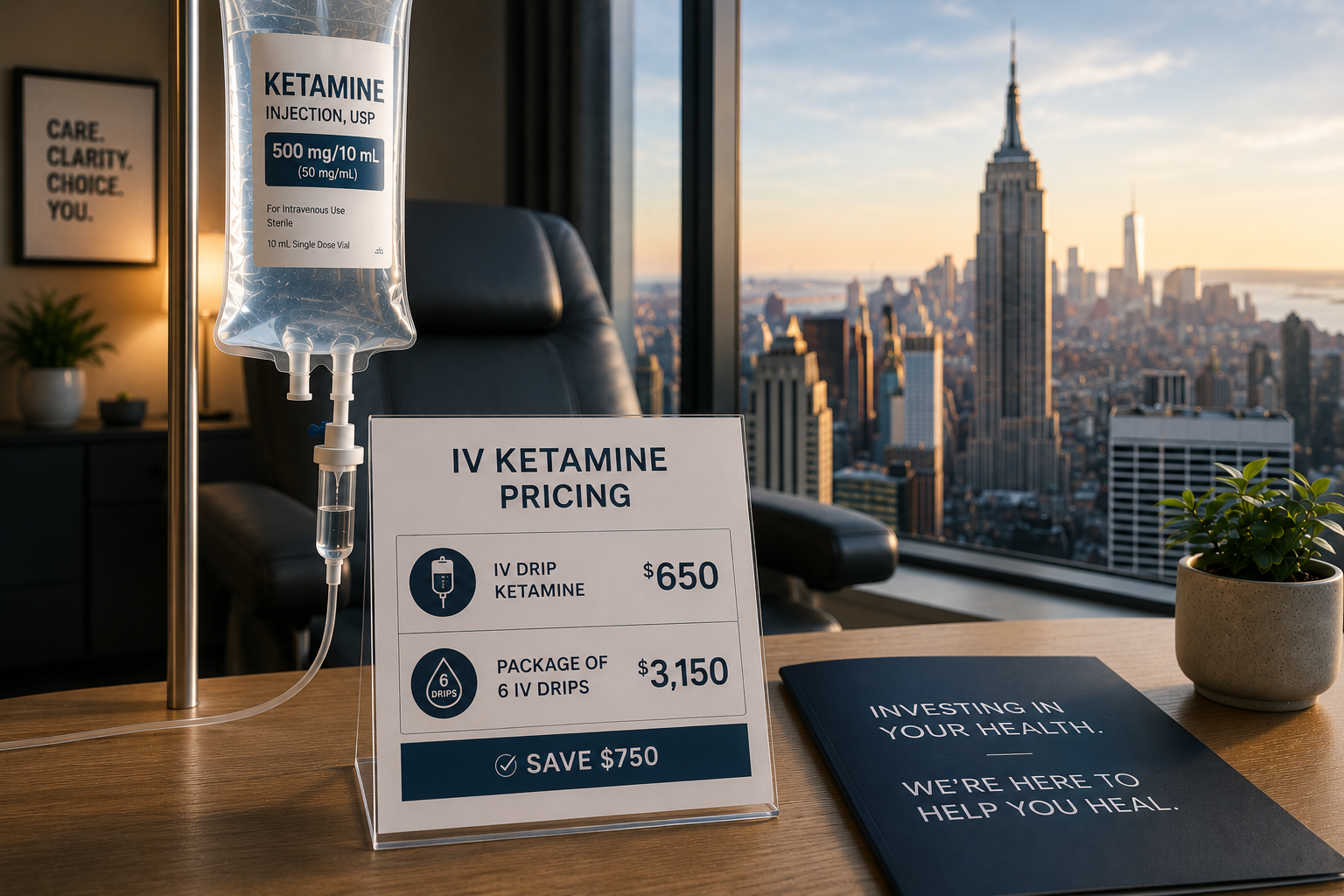
Current self-pay pricing:
| Session Type | Price |
| Introductory IV ketamine session | $550 |
| Standard single IV ketamine session | $650 |
| Six-session induction package | $3,250 |
Takeaway: Most patients pursuing a clinical course start with the six-session package, which reflects the protocol structure used in the research.
Dr. Qureshi’s internal medicine background includes clinical experience at Brooklyn Hospital, NYU Medical Center, and Henry J. Carter Hospital.
That grounding in medical complexity matters when screening patients who may have cardiovascular or hepatic considerations alongside a history of heavy alcohol use.
For ketamine for alcohol cravings in New York, Ketamine Wellness NY’s Queens location serves patients across the metro area.
Frequently Asked Questions (FAQs)
Is ketamine just swapping one substance for another?
No, medically supervised ketamine is not the same as recreational use. The difference is screening, setting, dose, monitoring, and intent. Still, this concern matters in abstinence-based recovery, so discuss it with a clinician before deciding whether ketamine fits your plan.
Does ketamine stop alcohol cravings permanently?
No responsible clinician will promise that. In the published trials, benefits were real but not universal. They were most durable when infusions were combined with ongoing psychotherapy and support. Ketamine appears to create conditions that make change more possible, not to produce change on its own.
Do I need to stop drinking before starting a consultation?
Discuss this with your physician. If you are physically dependent on alcohol, stopping abruptly carries serious medical risk. The sequence is supervised medical care first, then exploring ketamine as an adjunct. Do not attempt withdrawal without guidance.
Is ketamine for alcohol use disorder covered by insurance?
IV ketamine is not FDA-approved for alcohol use disorder and is typically a cash-pay service. Ketamine Wellness NY does not bill insurance directly. Some patients submit receipts to their insurer for potential out-of-network reimbursement, though coverage for this indication is unlikely.
Final Thoughts
Ketamine for alcohol use disorder sits at a genuinely interesting point in the research. The signal is real, the mechanism is plausible, and a handful of well-designed trials have shown meaningful outcomes.
It is also early, and the evidence calls for measured expectations rather than optimism without limits.
The honest framing is this: ketamine may give some people with alcohol use disorder a meaningful additional tool. Most importantly, when ketamine is paired with therapy and ongoing support.
Ketamine is not a cure, and it is not for everyone. Ketamine Wellness NY’s role is to provide that tool responsibly, within a clinical framework, for the patients it genuinely makes sense for.
Talk To Ketamine Wellness NY
If standard approaches have not been enough and you want to understand whether ketamine is a reasonable part of your recovery plan, the team at Ketamine Wellness NY can give you an honest answer.
Book a consultation at our Jackson Heights (Queens) or Great Neck (Long Island) clinic. If you are in crisis or at risk of alcohol withdrawal, please seek urgent medical care first.
 Skip to content