

The clocks fall back, and suddenly the sun is gone before you leave work. By January, the gray can feel like it has followed you indoors. If you live here, you know the shift.
For many people, that low stretch is the winter blues: real, unpleasant, and temporary. For others, it is seasonal depression on Long Island, a recurring form of major depression. That kind of depression can quietly take over the months between November and March.
Is this year's slump something more? This guide helps you tell the two apart. We cover which treatments have the strongest evidence for seasonal affective disorder (SAD).
We also explain what to do when winter depression keeps returning despite treatment. For some adults, ketamine therapy may become part of that conversation, with care and caveats. Let's start by sorting out what you feel.
Winter Blues Vs. Seasonal Depression On Long Island: What's The Difference?
Many people use the terms interchangeably, but clinicians do not. This section explains how the winter blues differ from seasonal affective disorder, and why that difference changes what kind of help makes sense.
What is seasonal affective disorder? Seasonal affective disorder (SAD) is a type of depression with a recurring seasonal pattern. It usually starts in late fall and eases in spring. Unlike the winter blues, it affects how you feel, think, and function, and needs clinical attention.
The National Institute of Mental Health (NIMH) describes the winter blues as a common dip in mood when days shorten. SAD is different, and its symptoms typically last four to five months each year.
Clinicians treat SAD as a seasonal pattern of major depression, so it deserves the same attention as other depressive episodes.
NIMH also separates SAD from the holiday blues. Family visits, money worries, and a crowded calendar can make December hard. SAD follows daylight, not the holidays, so a low that lasts until spring deserves attention.
So, is it seasonal depression or winter blues? This winter blues vs. seasonal depression table follows NIMH guidance.
| Winter Blues | Seasonal Depression (SAD) | |
|---|---|---|
| What It Is | A common dip in mood and energy as days shorten | A recurring form of major depression with a seasonal pattern |
| Severity | Mild; you still function and enjoy things | Affects how you feel, think, and behave |
| Duration | Usually brief and changeable | Most of the day, nearly every day, for at least two weeks; often four to five months |
| Pattern | Can happen in any winter | Episodes in the same season for at least two consecutive years |
| What Helps | Daylight, activity, routine, social contact | Clinical assessment, then light therapy, psychotherapy, or medication |
Takeaway: If the low lasts most of the day, nearly every day, for at least two weeks, get it assessed for depression rather than waiting for spring.
Why Long Island Winters Hit Harder Than You'd Expect
Geography and daylight both shape who feels the winter slump most. Whether you live in Nassau County or farther east, the same basic daylight facts apply.
SAD is more common the farther north people live, where winter days are shorter. NIMH cites New England as a higher-risk region compared with southern states such as Texas or Florida. Long Island sits on New England's doorstep, with similar compressed winter daylight.
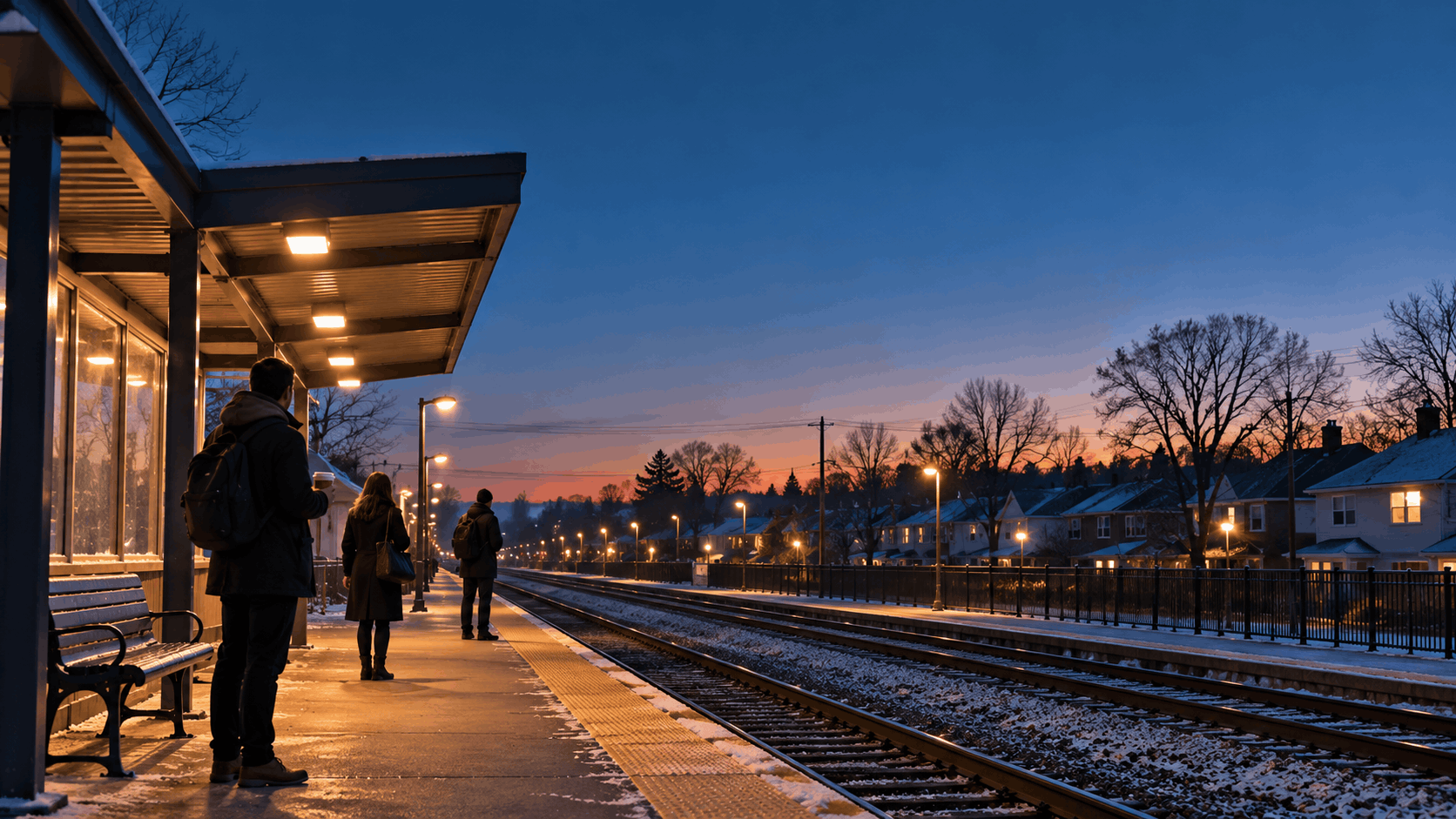
Why does this matter in 2026? Daylight saving time ends on Sunday, November 1, 2026. After that weekend, many people who ride the LIRR or drive the LIE leave home and return in the dark. That routine can remove the morning light that light therapy for SAD is meant to replace.
Risk is not only about geography, according to NIMH. SAD occurs much more often in women than in men, and it usually begins in young adulthood. It also occurs more often in people with depression or bipolar disorder, especially bipolar II. It can run in families, so your relatives' history may offer clues.
Signs Your Winter Low Has Become Something More
Early recognition helps you act sooner, and gives you more time to plan. Below we outline core SAD symptoms, winter-specific changes that are easy to dismiss, and when a doctor's visit makes sense.
Seasonal depression shares the core symptoms of major depression. NIMH lists several symptoms, including the ones below.
- A persistent sad, anxious, or empty mood most of the day, nearly every day
- Loss of interest or pleasure in activities you normally enjoy
- Feelings of hopelessness, guilt, or worthlessness during most days
- Low energy, fatigue, or feeling slowed down for most of the day
- Trouble concentrating, remembering details, or making everyday decisions
- Thoughts of death or suicide, which call for immediate help
Winter-pattern SAD often adds three features that are easy to dismiss as hibernation.
- Oversleeping (hypersomnia), even when you still feel tired
- Overeating, especially carbohydrate cravings, often with weight gain
- Social withdrawal, or the urge to cancel plans and stay in
A diagnosis involves more than one bad month. A clinician usually looks for depressive episodes in the same season for at least two consecutive years. Those episodes should outnumber any episodes at other times of year.
If winter costs you at work, in relationships, or in self-care, take it seriously. The same goes for a second or third hard winter in a row. Book a visit with your primary care physician or a mental health professional rather than waiting for spring.
If you are unsure whether work stress is the cause, our guide to burnout or depression can help you prepare.
First-Line Treatments For Seasonal Depression
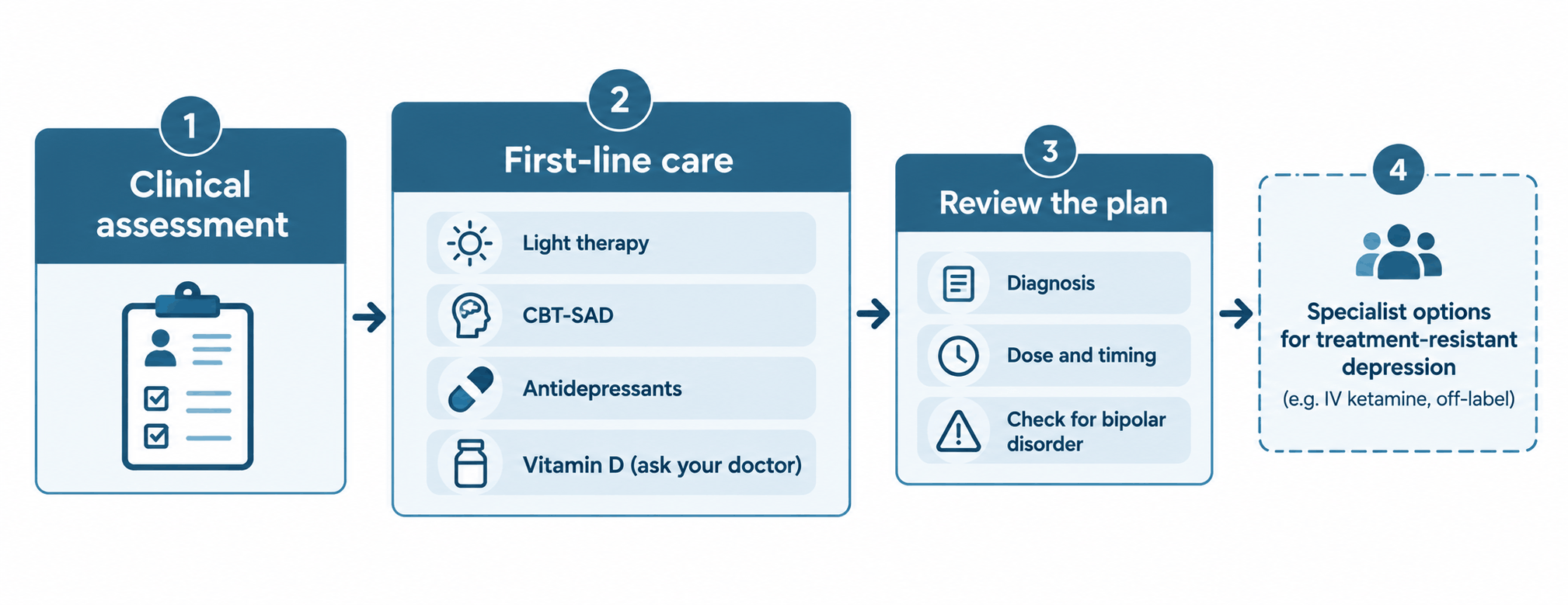
SAD is treatable, and most people start with options backed by years of research. Seasonal depression treatment usually falls into four groups, and they can be used alone or together.
Your primary care physician, psychiatrist, or therapist can help you choose.
Light Therapy For SAD
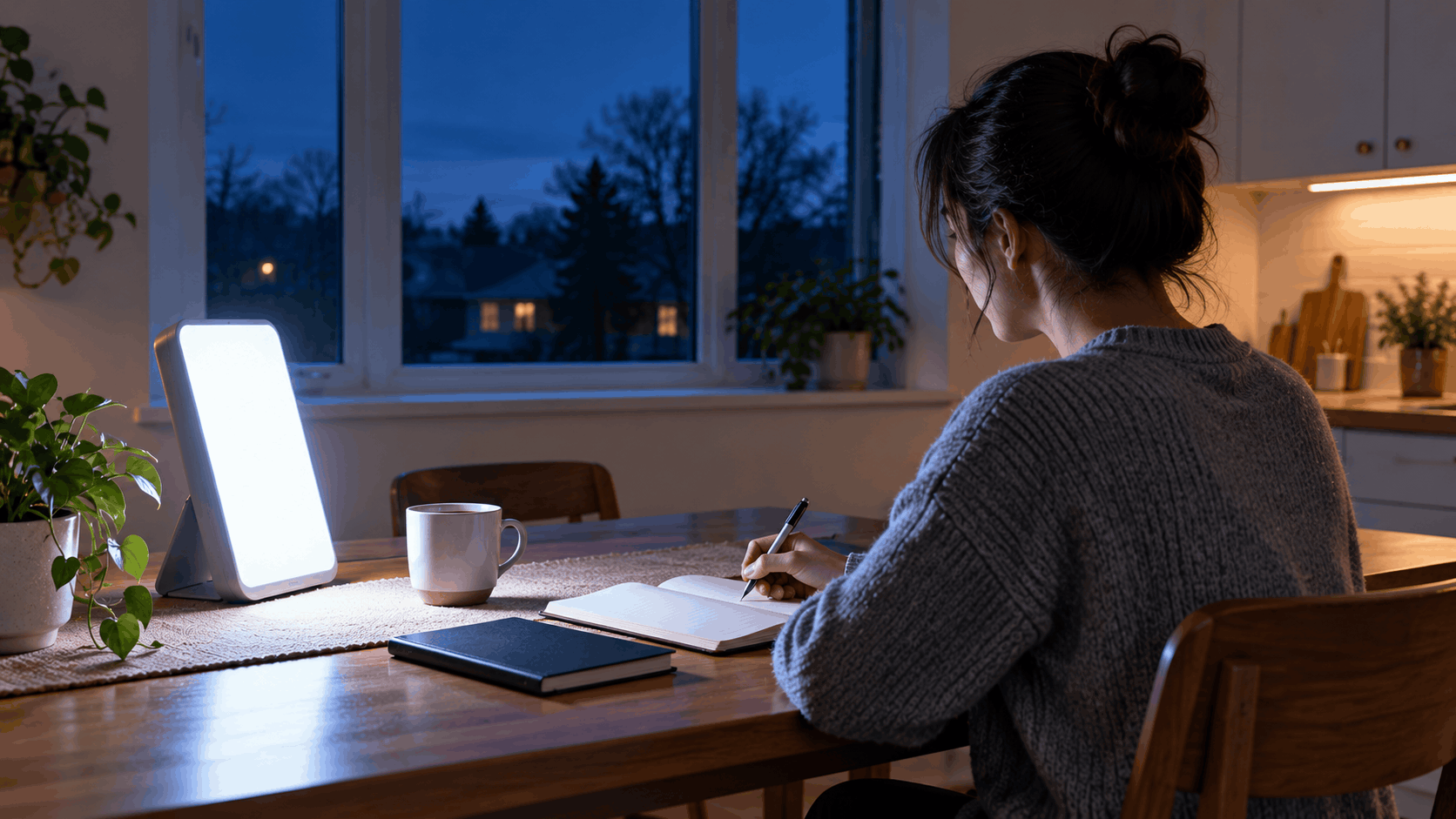
Light therapy has been a mainstay for winter-pattern SAD since the 1980s. It usually means sitting in front of a 10,000 lux light box each morning. Sessions last about 30 to 45 minutes, from fall through spring.
Most light boxes filter out UV light, but some eye conditions or medications call for medical supervision. Ask your clinician whether a light box suits you and your health history.
A Common Scenario
Someone buys a light box in late October and places it beside the coffee maker. They use it every morning, even on days when they do not feel like it. By December, mornings feel a little less heavy.
Cognitive Behavioral Therapy For SAD
CBT-SAD is cognitive behavioral therapy adapted for seasonal depression. It is typically delivered in group sessions twice a week over six weeks.
In head-to-head research, it worked about as well as light therapy. One study that followed people across two winters found its benefits seemed to last longer.
Antidepressant Medication
Antidepressants, including SSRIs, can help, usually after four to eight weeks.
The FDA has approved extended-release bupropion to help prevent seasonal episodes. It is taken daily from fall through early spring in people with a history of SAD.
Never stop or change a prescribed medication without talking to your prescribing clinician.
Vitamin D
Some research links low vitamin D levels to winter-pattern SAD. Studies of vitamin D supplements have produced mixed results so far. Check with your doctor first, since vitamin D can interact with some medications.
Timing matters more than most people expect. NIMH notes that people with a history of SAD may benefit from starting treatment before symptoms return. If you are reading this in October, now is a good time to call your provider.
When Seasonal Depression Doesn't Respond To Treatment
For most people, one approach or a combination of approaches brings real relief. Some people follow every step and still struggle each winter, and that deserves a clear, practical next step.
Because SAD is major depression with a seasonal pattern, the same clinical questions apply. If two adequate antidepressant trials gave you too little relief, a clinician may call it treatment-resistant.
Some people call this treatment-resistant seasonal depression, meaning a seasonal pattern that has not responded to standard care.
Persistent symptoms after several winters are a reason to ask for a second look at the whole plan. A review can cover your diagnosis, dose, timing, and how consistently each treatment was used.
Our guides to depression that isn't responding to medication and to when antidepressants stop working go deeper.
Ask one more question: could the pattern point to bipolar disorder? NIMH notes that SAD is more common in people with bipolar II, and treatment for bipolar depression differs. An accurate diagnosis comes first, and it can change which medications are safe.
Because some treatments can affect mood stability in bipolar disorder, your clinician should guide each step.
Where IV Ketamine Fits, and Where It Doesn't
IV ketamine has a narrow role in depression care, and it does not come first. Here we explain what research shows, what remains unknown, and how supervised infusions work at our clinic.
IV ketamine is not a first-line treatment, and it does not replace light therapy, psychotherapy, or a managed medication plan. Its role is narrower: an option for adults whose depression has not responded to standard treatment. Any talk of ketamine for seasonal depression needs that context.
In a 2006 NIMH study, a single low-dose IV ketamine infusion improved symptoms within hours. Those participants had failed at least two adequate antidepressant trials. A 2013 two-site randomized trial found greater 24-hour improvement than an active control, midazolam.
Research has focused on treatment-resistant depression broadly, not on SAD specifically. So a decision rests on your whole depression history, not on the season alone. Our guide to treatment-resistant depression explains how clinicians define it.
Ketamine is not FDA-approved for any psychiatric disorder, so its use for depression is off-label. The FDA has warned patients and providers about risks of compounded ketamine products, especially at-home use without a provider on site to monitor patients.
At Ketamine Wellness New York, every IV infusion is supervised by Dr. Pervaiz Qureshi, MD, board-certified in internal medicine. He completed his internal medicine residency at Brooklyn Hospital Center and has served at NYU and Henry J. Carter Hospital.
He has more than 30 years of clinical practice. A registered nurse monitors your blood pressure, heart rate, and oxygen throughout.
Here is what the process looks like:
- A clinical intake covering your mental health history, medications, and goals, with a written treatment plan
- Infusions lasting 40 to 90 minutes, then 30 to 60 minutes of recovery, about two hours in total
- A recommended series of six infusions over two to three weeks, with boosters discussed afterward if appropriate
- Coordination with your existing psychiatrist or therapist, so ketamine supports the care you already have
- A ride home arranged in advance, since you cannot drive after an infusion
Ketamine is not right for everyone, and screening comes first. Read who is not a good candidate for ketamine therapy, or what happens during an infusion, before you book.
For broader context, see our overview of depression treatment in New York.
Getting Care In Great Neck This Winter
Local access matters when winter schedules are already stretched and daylight is short. Here is where our Long Island clinic is, how to reach it, and how payment works for new patients.
Our Long Island clinic in Great Neck is at 45 Middle Neck Road, Suite 220. It sits about a five-minute walk from the LIRR Great Neck station on the Port Washington branch. It is also roughly five minutes from LIE Exit 33. The clinic is open seven days a week.
Ketamine Wellness NY has clinics in Jackson Heights (Queens) and Great Neck (Long Island). We are cash-pay, accept HSA and FSA cards, and do not bill insurance directly. Current session and package prices are on our pricing page.
Frequently Asked Questions (FAQs)
Is seasonal depression the same as the winter blues?
No, the winter blues are a mild, common dip in mood as days shorten. Seasonal affective disorder is a form of major depression that returns in the same season. It affects how you think, feel, and function, so it deserves a clinical assessment.
When does seasonal depression usually start on Long Island?
Winter-pattern SAD typically begins in late fall or early winter and lifts in spring. Many people first notice it after daylight saving time ends in early November. If you have had it before, talk to your provider in early fall.
Can ketamine help seasonal affective disorder?
Ketamine has been studied for treatment-resistant depression, not for SAD specifically. A physician can assess whether IV ketamine is appropriate if standard treatments have not worked. It is used off-label and does not replace light therapy, psychotherapy, or antidepressants.
How much does ketamine therapy cost in NYC?
Ketamine Wellness NY is cash-pay, accepts HSA and FSA cards, and does not bill insurance directly. Current session and package prices are listed on our pricing page.
Can I keep my current psychiatrist or therapist if I start ketamine?
Yes, your intake at Ketamine Wellness NY includes a written plan that covers coordination with your current psychiatrist or therapist. Never stop or change a medication without talking to your prescribing clinician.
Where is Ketamine Wellness NY located?
Ketamine Wellness NY has two clinics, in Jackson Heights (Queens) and Great Neck (Long Island). We do not have a Manhattan location, and the Great Neck clinic is near the LIRR and LIE.
Final Thoughts
Seasonal depression on Long Island is common, and it is also treatable. You do not have to wait for spring and hope the heaviness lifts on its own. Start with a conversation about your symptoms, your history, and the treatments that already have strong support.
If those steps have not been enough, there are still options worth discussing with a physician. Clarity about what you are facing is often the first real relief.
Talk To A Physician Before Another Winter Slips By
If this is not your first hard winter, a conversation with a physician can clarify your options. That is especially true if the usual treatments have not been enough for you.
Call our Great Neck clinic at (516) 203-1041 or book a consultation to arrange an intake with Dr. Qureshi's team. You can also visit us at our Jackson Heights (Queens) or Great Neck (Long Island) clinic. Please note that we do not have a Manhattan location.
If you are in crisis, call or text 988 now, or call the Long Island Crisis Center at (516) 679-1111.
Resources
- NIMH: Seasonal Affective Disorder (NIH Pub. 23-MH-8138, revised 2023)
https://www.nimh.nih.gov/health/publications/seasonal-affective-disorder - Zarate Jr, et al. (2006). A Randomized Trial of an N-methyl-D-aspartate Antagonist in Treatment-Resistant Major Depression
https://jamanetwork.com/journals/jamapsychiatry/fullarticle/668195 - Murrough, et al. (2013). Antidepressant Efficacy of Ketamine in Treatment-Resistant Major Depression: A Two-Site Randomized Controlled Trial
https://psychiatryonline.org/doi/10.1176/appi.ajp.2013.13030392 - FDA: Potential Risks Associated With Compounded Ketamine Products
https://web.archive.org/web/20260530025451/https://www.fda.gov/drugs/human-drug-compounding/fda-warns-patients-and-health-care-providers-about-potential-risks-associated-compounded-ketamine