Key Takeaways
- Most patients detect a measurable reduction in anxiety within 1 to 3 hours of their first IV infusion
- Peak neuroplasticity and the clearest “mental quiet” typically emerge within the 24 to 72-hour window post-treatment
- A series of six infusions is generally required to consolidate short-term relief into lasting stability
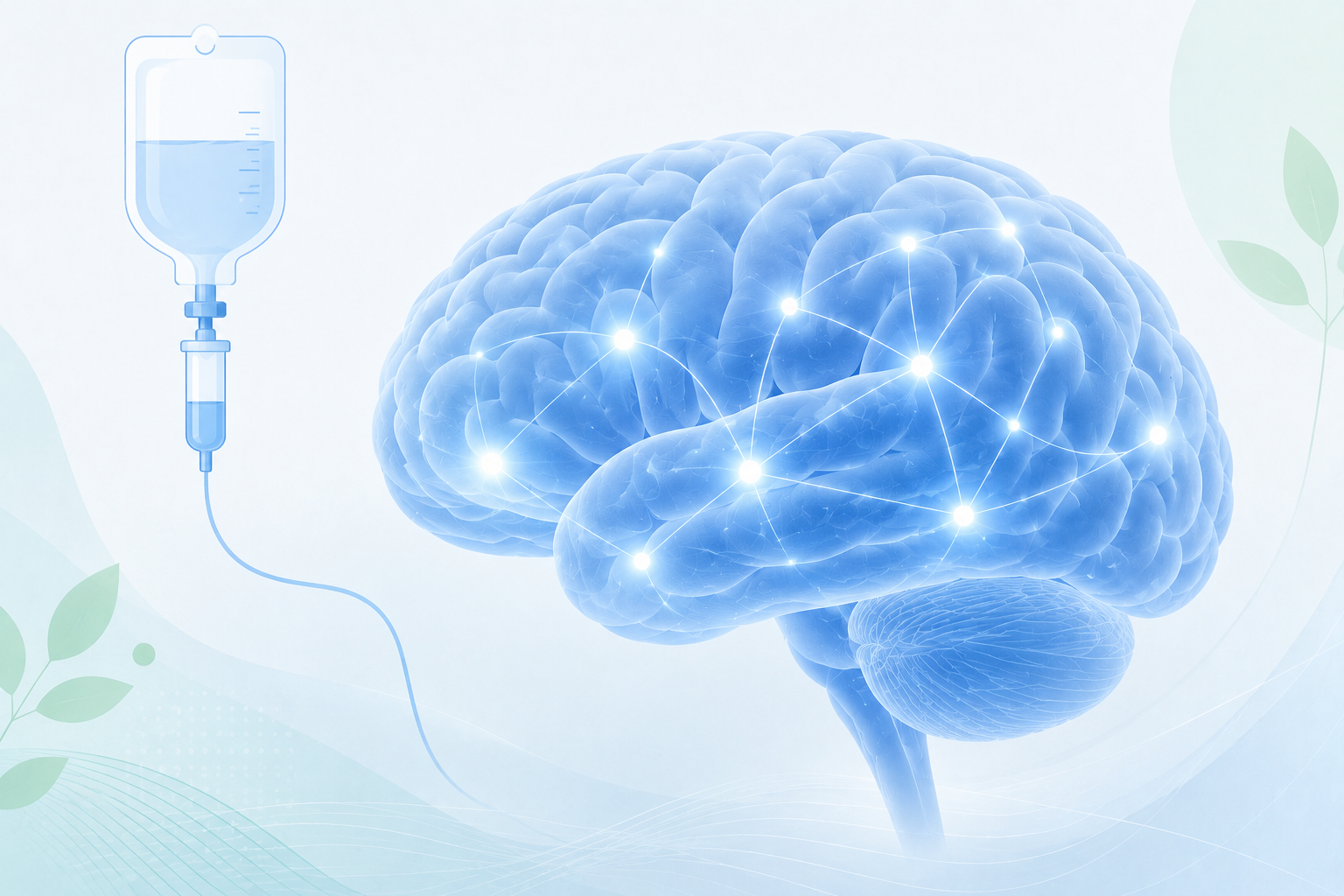
- Ketamine targets the glutamate system, not serotonin, which is why onset is measured in hours, not weeks
- Approximately 50 to 70% of patients in treatment-resistant populations respond favorably to the induction protocol, though individual results vary by dose, diagnosis, and history
When Will Ketamine Actually Reduce Anxiety? The Short Answer
Ketamine for anxiety refers to the off-label use of IV ketamine infusions to reduce symptoms of generalized anxiety, panic disorder, social anxiety, and PTSD-related anxiety.
Unlike SSRIs, which require 4 to 8 weeks to produce initial effects, ketamine acts on NMDA glutamate receptors and triggers rapid synaptic growth.
Research published in the British Journal of Clinical Pharmacology found significant anxiety reductions within the first 12 hours of administration. Some patients also reported changes as early as 3 hours post-infusion.
More substantial relief typically settles in 24 to 72 hours, with cumulative gains building across a full series of four to six infusions over two to three weeks.
The Phased Timeline: From First Infusion To Lasting Calm
Ketamine’s relief isn’t a single event. It’s a cascading biological process that begins the moment the IV drip starts. Understanding each phase helps patients interpret what they’re feeling, and stay patient when it matters most.
Phase 1: The 60-Minute Dissociative Reset (0–60 Minutes)
The infusion itself often produces a dissociative state. Patients feel detached from their physical surroundings and, importantly, from their anxious thoughts.
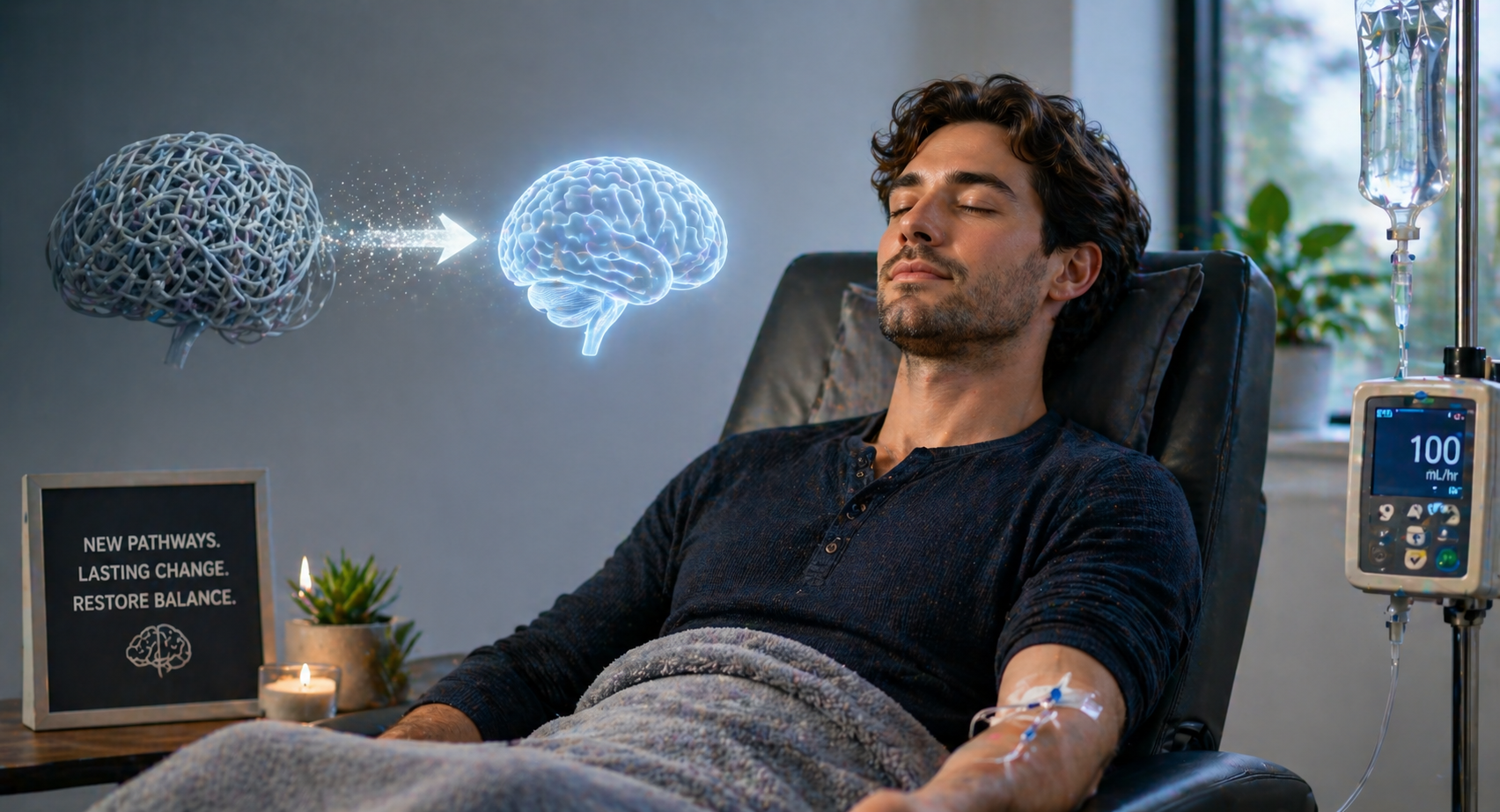
This is the visible sign of NMDA receptor antagonism at work. Ketamine blocks these receptors and begins quieting the overactive neural pathways that drive chronic worry and physical tension.
Many patients report a reduction in physical anxiety symptoms, chest tightness, racing heart, before the infusion even finishes.
The dissociation is temporary. The neurochemical reset happening underneath it is not. This initial window interrupts the brain’s habitual “fight or flight” feedback loop.
One note worth setting clearly: the dissociative experience is not itself the relief. It is the delivery mechanism for the relief that follows.
Phase 2: The “Mental Softening” (Hours 1–12)
As the dissociative effects fade, a different sensation often emerges. Most patients describe it as a “mental quiet,” baseline anxiety may still be present, but its volume is significantly reduced. The brain is beginning to transition from immediate pharmacological effects to structural repair.
During these first twelve hours, typical stressors feel less reactive. Triggers that would have produced immediate panic or intrusive thoughts feel less sharp.
At Ketamine Wellness New York, we monitor these early responses closely. This window helps us understand how the patient’s system is responding and whether protocol adjustments are warranted.
First-infusion relief varies from patient to patient. Some feel it strongly in this window. Others don’t notice changes until the next morning. Both are within normal range.
Phase 3: Peak Neuroplasticity and Sleep Improvement (Days 1–3)
The 24 to 72-hour post-infusion window is where the most clinically significant changes typically occur. This is driven by a surge in Brain-Derived Neurotrophic Factor (BDNF), a protein that acts as a growth signal for neural connections.
Research in Science demonstrated that synaptic protein levels and dendritic spine density in the prefrontal cortex increase within hours and peak around the 24-hour mark.
Patients often wake up the day after their first infusion noticing something different. The internal anxious commentary is slower. Reactive anxiety to everyday stressors is softer.
Sleep quality frequently improves in this window, the brain is no longer stuck in hypervigilance overnight. This peak in neuroplasticity creates a therapeutic window where meaningful psychological work becomes more accessible.
Research found subanesthetic doses below 0.5 mg/kg may produce less durable effects in some patients, though dose-response relationships vary by individual and condition. The peak neuroplastic response in Days 1–3 is noticeably more pronounced at the therapeutic dose.
Phase 4: The Cumulative Build and The Honest Wane (Days 4–14)
Relief from a single infusion can begin to soften after several days. This is not a treatment failure. It is the clinical rationale for a multi-session protocol. Each subsequent infusion at Ketamine Wellness NY builds on the neurological foundation laid by the previous one.
By the third or fourth infusion, most responders find that the calm is more consistent between sessions. The goal across these two weeks is to shift from “temporary relief” to “sustained stability.”
Being clear about the waning pattern matters. Patients who don’t understand it sometimes interpret the dip as failure and stop treatment before the full benefit has been established. Staying the course through the initial series is where the durable results are built.
Phase 5: Maintenance and The Therapy Window (Week 3 and Beyond)
By the end of a full induction series, typically six infusions over two to three weeks, many patients find their anxiety relief holds for weeks to months.
Research from Vanderbilt University suggests that structural brain changes from a completed series can support extended periods of relief with periodic maintenance infusions.
Maintenance sessions are scheduled based on individual response. The frequency varies, some patients need a booster at six weeks, others at three months.
This phase is also where the synergy with ongoing psychotherapy produces its strongest results. Ketamine creates the neuroplastic window. Therapy determines what gets built inside it.
Ketamine Vs. SSRIs For Anxiety: Why The 4-Week Gap Exists
The speed difference isn’t a marketing claim. It’s a mechanistic one. Understanding it helps patients make more informed decisions about their care.
SSRIs work by gradually increasing serotonin availability in the brain. According to NICE guidelines, SSRIs typically require 2 to 4 weeks for an initial response and up to 12 weeks for full clinical effect. The delay exists because the brain must slowly downregulate receptors and rebuild its signaling balance over time.
Ketamine bypasses the serotonin system entirely. It targets glutamate, the brain’s most abundant neurotransmitter, by blocking NMDA receptors and triggering the mTOR pathway. This stimulates synaptic growth almost immediately. In practical terms, ketamine can achieve in 24 hours what SSRIs often take two months to approach.
For patients dealing with ketamine for anxiety and depression, where both conditions are present, this speed matters clinically. The anxiety-depression overlap is common. Ketamine addresses both simultaneously through the same glutamatergic mechanism.
For patients managing both anxiety and depression, the same neuroplastic mechanism produces improvements in both conditions along a similar timeline. The anxiety-depression overlap is clinically common.
Research from BJCP found that anxiety and depression improvements correlated at both subacute and sustained time points following ketamine administration. A single induction series addresses both conditions simultaneously, without requiring separate treatment protocols.
Comparison of IV Ketamine at Ketamine Wellness NY, Oral At-Home Ketamine, and Standard SSRIs for Anxiety | Feature | IV Ketamine Therapy
(Ketamine Wellness NY) | Oral Ketamine (At-Home) | Standard SSRIs (Zoloft/Lexapro) |
| Typical Onset of Relief | 1–24 Hours | 24–48 Hours | 4–8 Weeks |
| Primary Mechanism | Glutamate / NMDA Reset | Glutamate / NMDA Reset | Serotonin Reuptake |
| Bioavailability | 100% (Directly to Bloodstream) | ~10–30% | Varies (Digestive dependent) |
| Medical Supervision | Full In-Clinic Monitoring | Unsupervised or Tele-video | None (Home administration) |
| Precision Dosing | High (Calibrated by Dr. Qureshi) | Medium (Fixed dose levels) | Low (Trial and error) |
| Anxiety Response Rate | ~70% in Responders | Varies widely | ~40–60% |
| Treatment Frequency | Initial series, then as-needed | Daily or Weekly | Daily |
| Side Effect Monitoring | Real-time during infusion | Patient-reported | Patient-reported |
Takeaway: IV ketamine provides the fastest onset, highest bioavailability, and most precise dosing of the three options.
Here is a detailed comparison of Ketamine vs. SSRIs. Read it to know their mechanism, duration of action, and more.
Does A Higher Ketamine Dose Mean Faster Anxiety Relief?
This is one of the most common questions prospective patients ask about ketamine for anxiety dose. The short answer: not necessarily. The relationship between dose and speed is more nuanced than “more equals faster.”
As mentioned, research found subanesthetic doses below 0.5 mg/kg may produce less durable effects in some patients. These dose-response relationships vary by individual and condition.
Higher doses, however, can increase the intensity of the dissociative experience, which can be counterproductive for patients who already have a high baseline of panic or hypervigilance.
The goal isn’t the highest dose. It’s the right dose. Dr. Pervaiz Qureshi, board-certified in internal medicine and medical director at Ketamine Wellness NY, uses a personalized dosing protocol that calibrates the infusion to each patient’s weight, metabolism, anxiety subtype, and prior medication history.
Every person’s sensitivity to the medication is different. Precision here is what separates IV ketamine at a supervised medical clinic from unsupervised at-home options.
Read our detailed ketamine dosage guide to understand what you’ll receive and what to expect at your first infusion.
Realistic Expectations: Why Ketamine Doesn’t Work For Everyone
Ketamine is one of the most promising tools in modern anxiety treatment. It is not a guarantee. Setting honest expectations is part of how we serve our patients well.
Clinical data indicates that 50 to 70% of treatment-resistant patients achieve a meaningful response following the induction protocol. This is typically defined as a 50% or greater improvement in symptoms.
This means 30 to 50% may not respond to an initial series, as noted in Clinical Pharmacology & Therapeutics research. These are the real numbers, and they matter.
Several factors affect where a given patient falls:
- Anxiety subtype: GAD, panic disorder, social anxiety, and PTSD-related anxiety respond at different rates.
- Chronicity and severity: Longer-standing, more severe anxiety often requires more sessions before gains consolidate.
- Concurrent medications: Benzodiazepines can blunt ketamine’s effects — a clinically significant variable for many anxiety patients.
- Dose calibration: The difference between 0.25 mg/kg and 0.5 mg/kg is measurable in clinical outcomes.
- Integration support: Patients engaged in ongoing therapy alongside infusions tend to see faster, more durable results.
“Not working instantly” doesn’t mean “not working at all.” Some patients begin to notice shifts only after the third or fourth infusion. The full series matters. We tell this to every patient before they start because informed patients make better clinical partners.
Ketamine for Anxiety and Depression in New York : What The Timeline Looks Like Locally
Access to the multi-session induction series is one of the practical barriers to ketamine therapy. Completing six infusions over two to three weeks requires proximity to a qualified clinic. For patients across Queens and Long Island, that barrier no longer applies.
Ketamine Wellness New York operates as a medical-first clinic under the leadership of Dr. Pervaiz Qureshi. Every infusion is monitored in real time, with dosing adjusted based on each patient’s observed response rather than a fixed protocol.
Because anxiety and depression commonly occur together, our approach is designed to address both conditions. This makes us a natural fit for patients who want ketamine for anxiety and depression in New York.
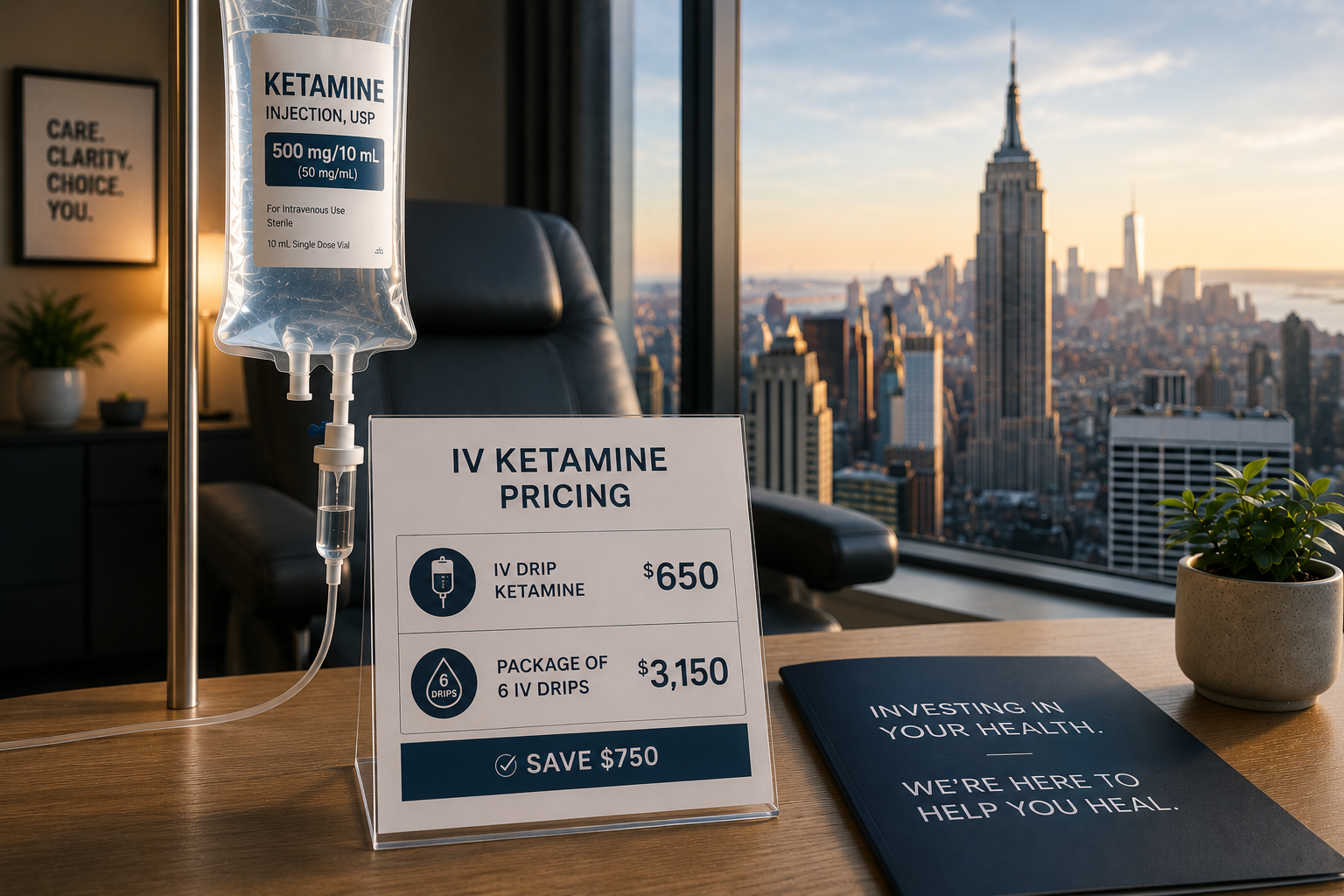
Local access also means easier scheduling for the booster infusions that extend therapeutic effect over time. Ketamine Wellness NY pricing is structured for accessibility, $550 for an introductory session, $650 for standard, $3,250 for a six-session induction package.
Frequently Asked Questions (FAQs)
How fast does ketamine work for social anxiety?
Social anxiety shows an initial reduction in social dread within 24 hours of the first infusion. Lasting changes in social behavior typically require the full induction series. Multiple sessions are needed to rebuild the neural pathways that support comfort and confidence in social settings.
How many sessions are needed for lasting anxiety relief?
A standard induction protocol consists of six IV infusions administered over two to three weeks. This frequency ensures that the initial neuroplastic changes consolidate into lasting structural improvement. Maintenance booster sessions are then scheduled based on individual response over time.
Will I feel more anxious during the ketamine infusion?
Most patients feel deep relaxation or detachment during the infusion. While the dissociative state can feel unusual, the medical team at Ketamine Wellness New York monitors each session closely. The experience is designed to remain calm, controlled, and therapeutic throughout.
Final Thoughts
So, how fast does ketamine work for anxiety? The timeline for ketamine therapy in New York offers something traditional medications rarely can: relief that begins in hours, not months.
The phased process, from the initial dissociative reset through the peak neuroplasticity window and into maintenance, is well-documented and clinically predictable. Individual results vary. The honest non-responder rate is real. And the protocol matters more than any single session.
If you are ready to explore whether ketamine infusion therapy fits your situation, a consultation is the right first step. We build every protocol around the individual because the timeline in this article is typical, but your experience will be your own.
 Skip to content