Skip to content
The room is dark. The blinds are shut. Even soft light sends pain radiating behind your eyes. For millions living with chronic migraine, that is not a bad day. That is Tuesday.
What makes it harder is the treatment cycle. Triptans work, until they stop working. You add preventatives, then CGRP inhibitors, then Botox. Each brings a moment of hope, then a slow return to the same pain.
Many patients describe reaching a point where their neurologist has said outright: “I don’t have anything left to offer you.”
Ketamine for migraines is not a first-line option. It was never designed to be. But for patients who have climbed the full treatment pyramid without lasting relief, IV ketamine infusions offer something different. A neurological reset, not another layer of symptom management.
This guide explains what that means, who it fits, and what to realistically expect.
By submitting this form you agree to be contacted via phone/text/email.
For most patients, migraine treatment follows a predictable path, from over-the-counter relief to specialist interventions. That path has an endpoint, and too many patients reach it.
Most chronic migraine patients know the progression well. It starts with NSAIDs and triptans, then moves to preventatives like beta-blockers and topiramate. From there, it escalates toward CGRP monoclonal antibodies, Aimovig, Emgality, Ajovy, and Botox injections.
These are proven treatments. They work well for a large portion of migraine sufferers.
But roughly a third of patients with chronic migraine do not achieve adequate relief from any combination of them. Some develop tolerance. Others cannot sustain the side effects. Many have a form of migraine that simply does not respond to these mechanisms.
When multiple drug classes fail in succession, the condition is formally classified as refractory migraine. This is the specific population for whom ketamine for migraines becomes clinically relevant.
In chronic migraine, the pain-processing pathways stay in a state of high alert even between attacks. Standard medications reduce symptoms at the surface level. They do not address the underlying sensitization driving the cycle.
This is the biological environment where ketamine infusion for migraines operates differently. It does not compete with triptans on the same receptor. It works upstream, on the mechanisms that keep the nervous system locked in a pain-amplifying state.
A recurring frustration among chronic migraine patients is being told their condition looks normal on scans. That does not mean the pain is imagined. Central sensitization is real, neurological, and measurable, and it is exactly what ketamine targets.
Unlike triptans that constrict blood vessels or CGRPs that block specific pain proteins, ketamine targets a fundamentally different set of receptors. Those include the ones directly tied to chronic pain amplification and neural sensitization.
Glutamate is the brain’s primary excitatory neurotransmitter. In people with chronic migraine, it accumulates in excess, flooding the pain-signaling system and keeping neurons in a hyperactivated state.
Ketamine is an NMDA receptor antagonist. When ketamine blocks these receptors, it reduces the volume of glutamate-driven activity, what researchers describe as calming the “glutamate storm.”
Research published in Practical Neurology identifies NMDA receptor antagonism as a key pathway for interrupting chronic pain states that have resisted other treatments. For patients in central sensitization, this mechanism creates the conditions for genuine pain pathway interruption, not temporary suppression.
The result, for many patients, is a measurable reduction in how intensely the brain registers pain.
Cortical spreading depression (CSD) is a slow wave of electrochemical activity that moves across the brain’s surface. Most researchers believe CSD is the primary driver of migraine aura and the pain cascade that follows it.
Ketamine has been shown to inhibit CSD. This inhibition may prevent the trigeminal nerve activation that launches the full migraine attack.
This matters specifically for patients whose migraines begin with visual or sensory aura and who have not found relief through abortive medications. The suppression of CSD is a mechanism that Botox, triptans, and CGRP antibodies do not directly target.
Ketamine is not appropriate for every migraine patient. Defining who responds best sets honest expectations, and ensures treatment goes to those most likely to benefit.
The primary candidate for ketamine therapy for migraines is a person living with chronic migraine. This is defined as 15 or more headache days per month, with at least eight of those meeting full migraine criteria.
This population has typically tried multiple preventatives at adequate doses without achieving sustained relief. Their pain is consistent, severe, and significantly affecting daily function, i.e., careers, relationships, and basic quality of life.
Also well-suited are patients with refractory migraine, those who have failed two or more classes of preventative therapy. If Botox, CGRP antibodies, and neurological preventatives have been tried without lasting success, your profile matches the population studied in the primary research on this treatment.
Episodic migraine that responds well to triptans is generally not a candidate for IV ketamine.
Status migrainosus is a continuous migraine attack lasting more than 72 hours. It does not respond to standard abortives and requires intervention beyond what oral or injectable rescue medications can provide. IV ketamine is used in these cases to interrupt the pain cycle directly.
A case series published in The Journal of Headache and Pain found that all six patients with refractory chronic migraine achieved a target pain score below 3 out of 10 during IV ketamine treatment, regardless of how many prior medications had failed.
Medication overuse headache (MOH) is another qualifying presentation. This happens when acute migraine medications, taken too frequently, begin triggering the very headaches they were meant to stop.
Ketamine can serve as a bridge therapy here, providing pain control while the patient safely reduces reliance on overused medications.
Two additional headache conditions respond well to IV ketamine and are often underrepresented in treatment conversations.
Cluster headache is considered one of the most painful primary headache disorders. A systematic review found that 54% of chronic cluster headache patients were pain-free within two weeks of a ketamine infusion course. Among episodic cluster headache patients, that figure reached 100% at the two-week mark.
Standard treatments for cluster headache, oxygen therapy, triptans, verapamil, help many patients but leave a significant subset without adequate control. For those cases, the same NMDA-targeted mechanism that interrupts chronic migraine also applies to cluster headache neurophysiology.
New daily persistent headache (NDPH) is another condition covered in the clinical literature on ketamine for intractable headache. A 2022 review in Practical Neurology addresses NDPH, cluster headache, and trigeminal autonomic cephalalgias alongside refractory migraine, noting similar central sensitization mechanisms across all of them.
If your primary headache disorder is cluster headache or NDPH rather than migraine, your candidacy is still worth discussing with Dr. Qureshi.
The evidence base for ketamine in refractory migraine comes primarily from specialized headache centers. The data is not yet from large randomized controlled trials, but outcomes from observational studies are consistent and clinically meaningful.
Two studies from Thomas Jefferson University’s Jefferson Headache Center are frequently cited in this area.
An observational pilot study found that mean headache pain dropped from 7.1 out of 10 at admission to 3.8 out of 10 at discharge. Of the patients studied, 71.4% were classified as acute responders.
The American Society of Anesthesiologists reported similar results in 2017. Approximately 75% of patients (46 of 61) with refractory migraines showed significant improvement in pain intensity after a ketamine course. Pre-treatment pain averaged 7.5 out of 10. Post-treatment, it dropped to 3.4 out of 10.
A 2021 review in PMC further supports ketamine’s role in primary headache disorders, specifically noting its positioning for patients who have not responded to conventional options.
Of those who did respond short-term, 30 to 40% reported sustained benefit at both one and three months post-treatment. That is a meaningful window for many patients who have had no relief at all.
This is not a cure. Not every patient responds. But for the right candidate, these outcomes are clinically significant.
Many chronic migraine patients share a similar turning point, the moment a trusted neurologist says they have nothing left to try. That conversation, for many, marks the start of researching ketamine.
Patients who complete a ketamine induction series often describe the relief as cumulative. A single session may not produce dramatic results. The change usually develops gradually, sometimes by the third or fourth infusion, as the neurological environment shifts.
Patients also commonly describe fear of the dissociative sensation before their first session as a barrier. Afterward, most report it felt far calmer than expected, more dreamlike than frightening. Setting that expectation beforehand often makes the session more comfortable.
Another consistent theme is the environment. For someone living with photophobia and phonophobia, a bright, noisy space can work against the purpose of treatment. This is why our clinic protocol prioritizes sensory control from the moment you arrive.
The following is based on a composite of patient experiences at Ketamine Wellness New York. Details have been adjusted to protect privacy.
Maria, a 38-year-old school administrator from Long Island, had lived with chronic migraine for nearly a decade. By the time she came to us, she was averaging 18 to 20 headache days per month.
She had tried four classes of preventatives, two CGRP inhibitors, and two rounds of Botox. Each helped briefly, then stopped. Her neurologist had started discussing inpatient infusion therapy, which meant a months-long waitlist and potential five-figure costs.
Her main concern was not just the pain, it was the unpredictability. She had stopped making plans, missed her daughter’s school events, and taken medical leave from work twice in the previous year.
After an initial consultation with Dr. Qureshi, Maria completed the six-session IV ketamine induction series over three weeks. She did not respond dramatically after the first session. By the fourth, she reported her first migraine-free stretch in over a year, four consecutive days without a full attack.
At the six-week follow-up, her headache frequency had dropped to eight to ten days per month. That is not pain-free. But it can mean the difference between a life shaped around avoiding triggers and one where plans feel possible again.
Maria’s outcome is not guaranteed for every patient. Some respond more fully. Some do not respond at all. What we offer is a medically supervised, evidence-informed protocol, and an honest conversation about whether your profile is the right fit.
For a migraineur, the environment is as important as the treatment. A bright, loud clinic is not just uncomfortable, it can worsen symptoms and undermine the session itself.
At Ketamine Wellness New York, each patient begins with a consultation with Dr. Pervaiz Qureshi, a board-certified internist. Screening includes blood pressure baselines and cardiovascular assessment, both important for migraine patients with vascular sensitivities.
Sessions take place in a quiet, light-controlled room. The infusion runs for approximately 40 to 60 minutes while vitals are monitored throughout. A mild dissociative sensation is common, most patients describe it as floating or dreamlike. It is temporary and resolves before discharge.
For patients in an active attack or status migrainosus, you do not need to wait for a headache-free window. Ketamine can be administered as an interventional rescue option. Our clinic environment is designed specifically to accommodate patients in acute migraine states.
Please arrange a driver for after your session. Post-infusion, most patients feel calm and rested but driving is not appropriate on the day of treatment.
Cost is a legitimate concern. Ketamine infusion for migraines is rarely covered by insurance. But for many chronic sufferers, the honest comparison is not ketamine versus nothing, it is ketamine versus what they are already spending.
CGRP inhibitors like Aimovig can exceed $7,000 per year at list price, requiring ongoing monthly use. Botox treatments add thousands more. Emergency room visits, common for status migrainosus, carry facility fees that can reach thousands per single visit.
The American Headache Society estimates that chronic migraine causes 113 million lost workdays annually in the United States. For individuals, that translates to real income loss, missed promotions, and disrupted careers.
At Ketamine Wellness New York, pricing is transparent:
A full six-session induction series costs $3,250. That is less than six months of a CGRP injectable at list price, delivered as a one-time outpatient protocol rather than a permanent monthly expense.
| Feature | Ketamine Wellness NY (Queens / Long Island) | Telehealth Ketamine | Psychiatric Ketamine Clinics | Inpatient Headache Centers |
|---|---|---|---|---|
| Primary Focus | Internal Medicine & Chronic Pain | Mental Health | Psychiatry / Depression | Academic Neurology |
| Delivery Method | 100% Bioavailable IV | Oral Lozenges | IV or IM | 5-Day Continuous IV |
| Migraine Protocol | NMDA / neuro-reset focus | Mood enhancement | Mood enhancement | Aggressive refractory care |
| Clinic Setting | Medical, dark room, quiet | Home environment | Psychiatric office | Hospital ward |
| Supervision | Board-certified internist | Remote monitoring | Psychiatrist / NP | Neurological team |
| Speed of Access | Often within 1 week | Fast (online) | Moderate | Months-long waitlist |
| Cost Transparency | $550 intro / $650 single | Monthly subscription | $500–$800/session | $10,000–$50,000+ |
Yes. Ketamine works as an interventional rescue treatment during an active attack or status migrainosus. Our clinic is equipped with light-controlled rooms designed to keep sensory stimulation to a minimum. You do not need to wait for a pain-free window to come in.
A series of six infusions is the standard protocol for sustained pain reduction. Relief tends to build cumulatively. Many patients notice the clearest shift around the third or fourth session. Our six-session package at $3,250 is designed to make the full induction series accessible.
Ketamine is not a known migraine trigger. Mild nausea may occur during infusion and is managed with supplemental medication. The dissociative sensation, commonly described as floating or dreamlike, resolves before you leave the clinic.
Most major insurance plans classify IV ketamine for migraine as experimental. We provide a superbill for potential out-of-network reimbursement. Our transparent pricing, $550 for an introductory session, allows you to plan clearly without surprises.
Psychiatric clinics primarily treat mood disorders. Dr. Qureshi applies an internal medicine framework to migraine neurophysiology, using dosing and monitoring protocols modeled on headache center research, not on mood-enhancement protocols used in mental health settings.
Relief duration varies by patient. Some report fewer migraine days for weeks to months after a six-session series, while others benefit from periodic maintenance infusions. Dr. Qureshi reviews your response after treatment to determine whether ongoing sessions are appropriate.
Chronic migraine is a neurological condition with measurable biological mechanisms. For some patients, those mechanisms do not respond to the standard toolkit, and no amount of persistence changes that.
Ketamine infusion for migraine headaches is not a universal answer. But for patients who have reached the end of the treatment pyramid, it offers a different mechanism, a different pathway, and for many, a meaningful reduction in pain frequency and intensity.
If your migraine pattern fits, chronic, refractory, or resistant to multiple treatment classes, we invite you to speak with Dr. Qureshi. The goal of that consultation is candidacy, not commitment.

Standard treatments for alcohol use disorder help many people. But relapse rates remain high, and
Complex regional pain syndrome (CRPS), also known as reflex sympathetic dystrophy (RSD), sits among the

The infusion ends, the IV comes out, and you start to feel like yourself again.
Ketamine for Sleep: What New York Patients Should Know Poor sleep is exhausting in ways
Note: Names and identifying details have been changed to protect patient privacy. Stories reflect documented

Note: Names and identifying details have been changed to protect patient privacy. Stories reflect documented

The wait is the hardest part. Anxiety makes sleep impossible. Every stressor triggers a physical

Panic disorder does not just feel scary. It quietly reorganizes your entire life around avoidance.

You tried one medication, then another, and continued taking different antidepressants. No results? You adjusted
The room is dark. The blinds are shut. Even soft light sends pain radiating behind

The burning never fully stops. It’s there when you wake up, when you try to
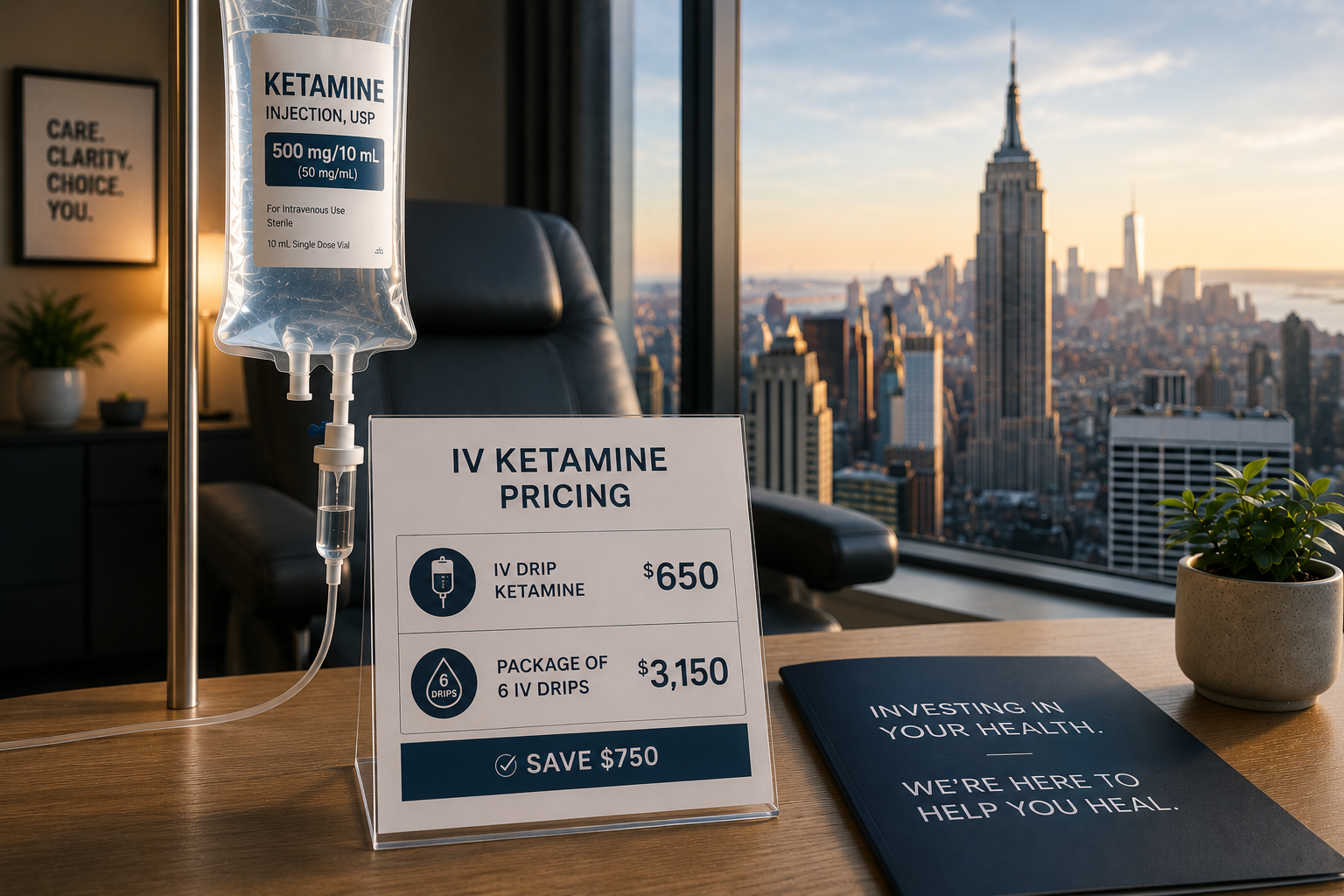
The cost of a single IV ketamine infusion in 2026 typically falls between $400 and

You did the work. You spoke with your psychiatrist, gathered your medication history, submitted the
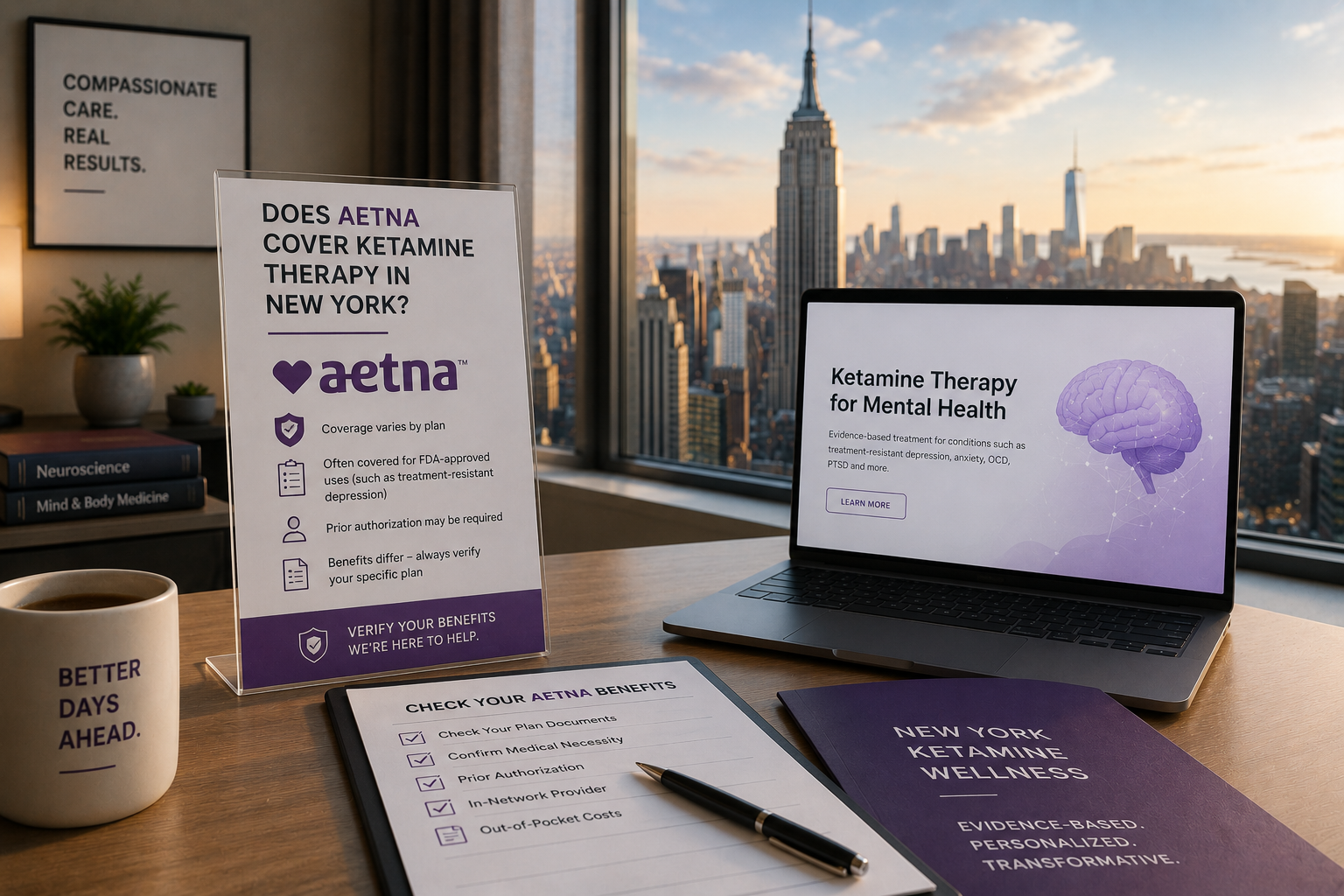
If you have an Aetna plan and you’re considering ketamine therapy for depression in New

Ketamine therapy, particularly in the form of intravenous (IV) infusions, has become a go-to treatment

Living in New York City often means paying a premium for everything, from rent to
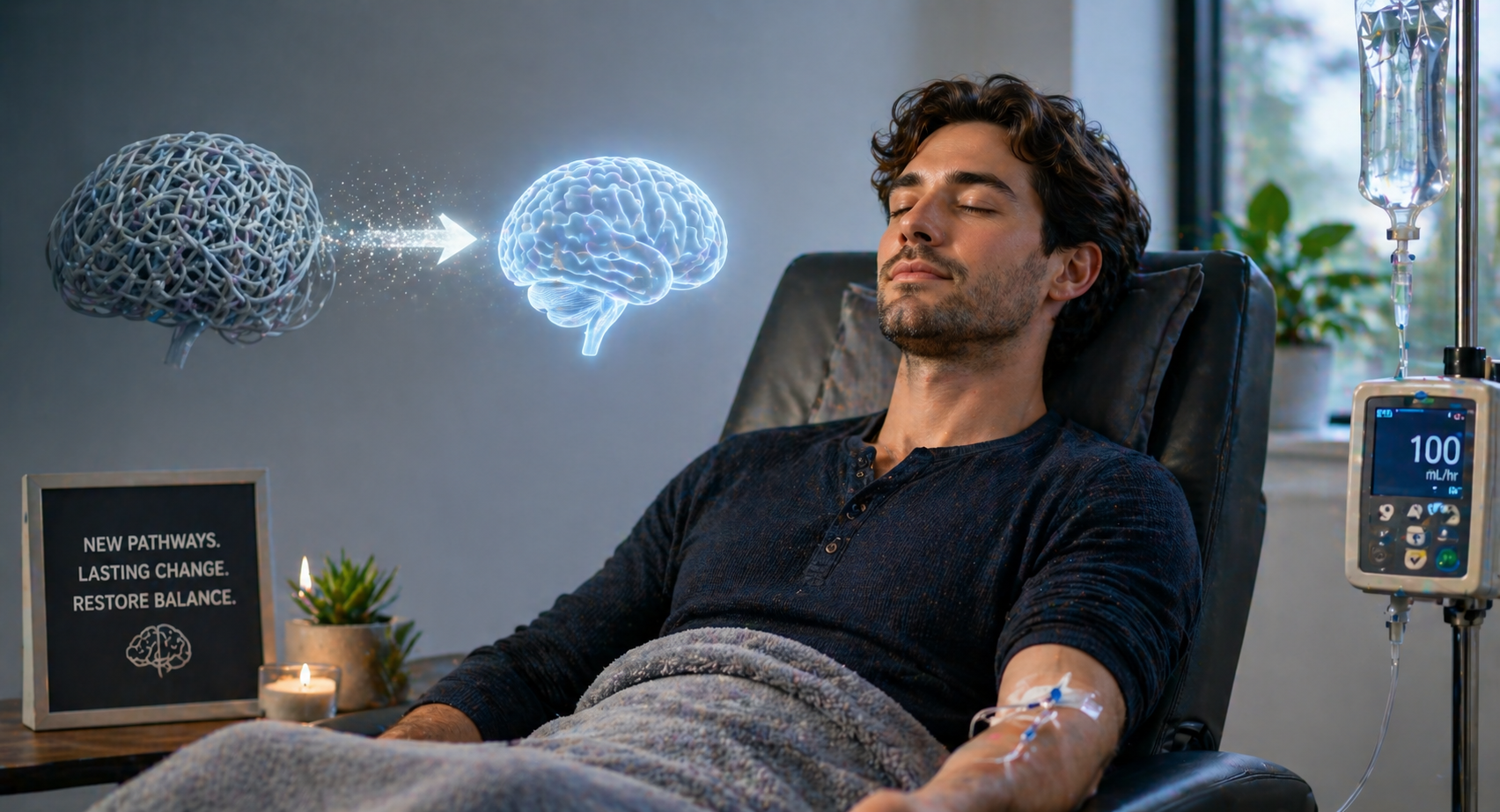
For many individuals living with obsessive-compulsive disorder (OCD), the mind feels like a transmission with

Ketamine therapy is gaining popularity for its ability to alleviate severe depressive symptoms in hours

Finding affordable mental healthcare in New York can feel like navigating a maze, especially when

For many, therapy offers a vital path to healing and self-discovery. However, after years of
Thank you for choosing Wellness Clinic. Our specialist care team will contact you within the next 12 hours to confirm your appointment and answer any questions youmay have.
our team will review your message and contact your shortly. we look forward to supporting your wellness journey
Check your phone or email to receive your unique coupon code. You’ll need it when booking your first appointment.
 Optimized by Seraphinite Accelerator