Skip to content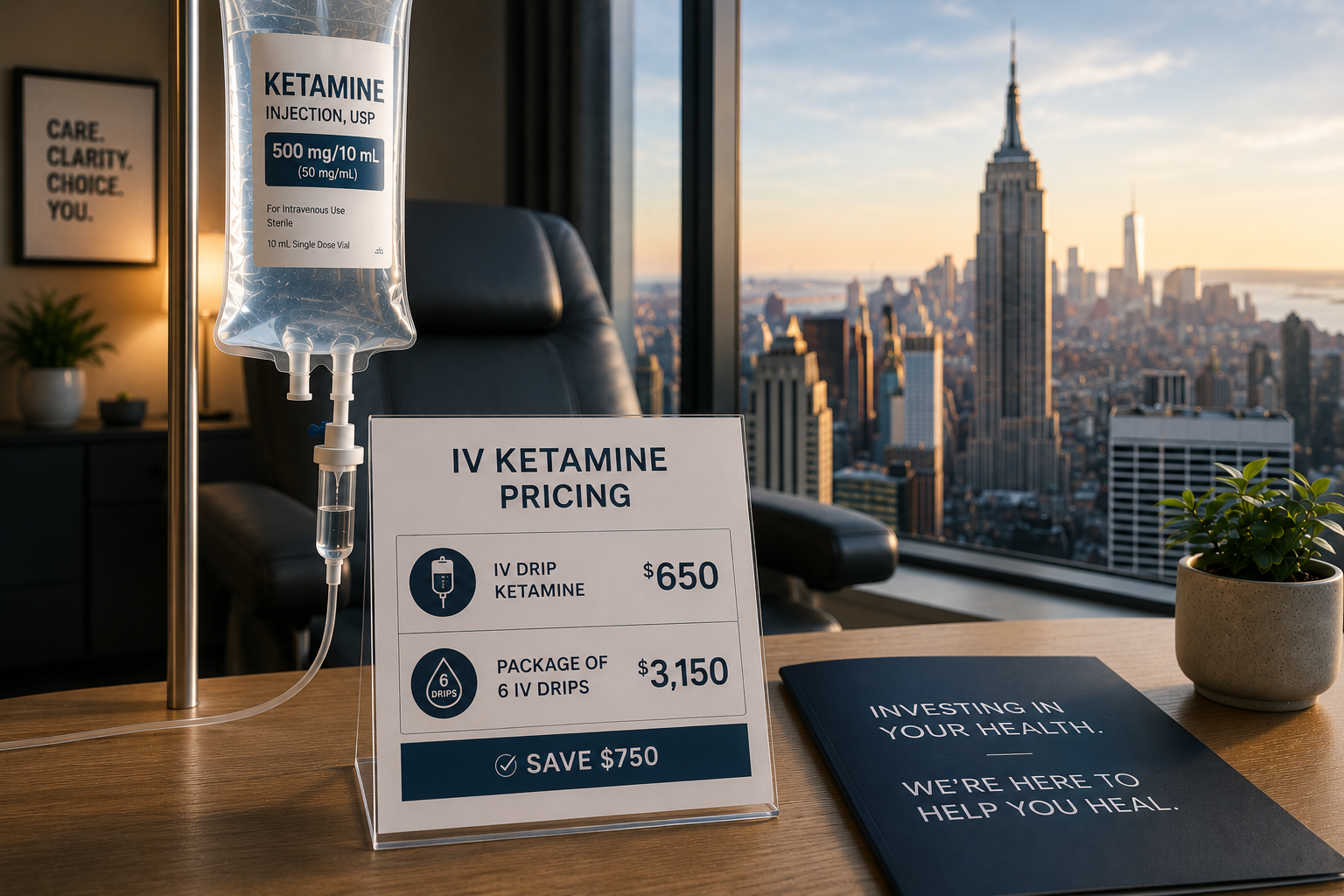
The cost of a single IV ketamine infusion in 2026 typically falls between $400 and $800 nationally. In the New York City metro area, including Queens and Long Island, prices often run toward the higher end of that range due to local operating costs.
That number is useful as a starting point, but it isn’t the full picture. Ketamine therapy is rarely priced as a one-time service. It is structured as a clinical protocol, usually built around an initial consultation, a 6-session induction series, reassessment, and possible maintenance treatment. The price of one session tells you what one appointment costs. It doesn’t tell you what a clinically meaningful course of care looks like.
This guide explains how IV ketamine is actually priced, what drives the differences between clinics, and how to evaluate cost in the context of what you’re actually receiving.
By submitting this form you agree to be contacted via phone/text/email.
A single infusion gives you a price, not the cost of care. Most ketamine treatment plans are structured as a series, not a one-time service, and understanding why helps you evaluate clinic pricing more accurately.
A single infusion can produce a noticeable shift. For some patients, that change is felt within hours. On its own, however, that effect is often temporary and inconsistent.
The reason most clinics follow a 6-session protocol over two to three weeks ties to how ketamine interacts with the brain. Ketamine works in part by increasing neuroplasticity — the brain’s ability to form new connections and loosen rigid thought patterns. One session briefly opens that window. Repeated sessions reinforce it.
This is a biological reason for the protocol structure, not a pricing tactic. Clinics design around a full series because that is how the treatment is intended to produce durable change.
When you move from a single session to a complete protocol, the financial picture changes meaningfully. If one infusion costs $400 to $800, a standard 6-session induction series typically runs between $2,400 and $4,800 nationally.
This is the number that matters for real-world planning. Initial pricing is often presented per session, which makes treatment feel more accessible at first glance, but it doesn’t reflect the actual structure of care. Clinics are not pricing isolated visits. They are pricing a complete induction phase.
At Ketamine Wellness New York, the 6-session package is priced at $3,250 total, with full physician oversight included throughout the series.
Many clinics offer package pricing that reduces per-session cost when patients commit to a full induction series. On the surface, this looks like a simple discount, but the actual value depends on what is included.
Before committing to any package, ask:
A lower upfront price doesn’t always mean lower total cost. Sometimes it means additional components are billed separately later.
Two clinics can offer the same treatment and quote very different prices. The gap usually comes down to location, clinic model, and the condition being treated.
Location is one of the strongest drivers of price differences in IV ketamine therapy. In major cities like New York, San Francisco, and Los Angeles, sessions often range from $500 to $800+. Higher rent, staffing, licensing, and demand all contribute.
In smaller cities and regional clinics, the same infusion is typically priced between $350 and $500. The clinical protocol is often nearly identical. The difference is the economic environment the clinic operates in.
This is where national averages become misleading. A national midpoint blends high-cost urban clinics with lower-cost regional providers, creating a number that doesn’t reflect your actual local market. Geography sets the baseline for what you’ll realistically encounter.
The cost of ketamine treatment in Queens and Long Island reflects the broader New York City healthcare market. Prices here are typically higher than in smaller towns due to elevated rent, staffing, demand, and clinical overhead.
For patients, this means national averages shouldn’t be the only benchmark. Paying $500 to $700 for a medically supervised IV ketamine infusion in Queens or Long Island falls within a reasonable range for the local market, especially when physician oversight, monitoring, and follow-up care are included.
At Ketamine Wellness New York, pricing reflects this local context. Patients in areas like Jackson Heights and Great Neck can access a $550 introductory IV drip, a $650 standard single infusion, or a $3,250 package for six treatments.
Not all ketamine clinics are structured the same way, even when they offer identical treatments. Some operate as streamlined infusion centers focused primarily on screening, administering the infusion, and short post-session observation. These models tend to be more cost-efficient because they limit time per patient.
Others follow a more psychiatric-integrated model, where treatment includes deeper clinical oversight, physician involvement, and structured follow-up across sessions.
The difference often shows up in what’s included in the price. Basic infusion models may exclude follow-up care or extended evaluation. Integrated models typically build ongoing assessment into the treatment plan. Lower cost doesn’t automatically mean lower quality, but it can mean less clinical depth built into the experience. The useful question isn’t which clinic is cheaper — it’s what level of medical structure is included in the price.
The condition being treated plays a direct role in pricing, especially when comparing mood disorders to chronic pain.
Depression and anxiety protocols generally involve shorter infusions of around 40 minutes at lower doses. These sessions are structured for neuroplastic response rather than prolonged exposure.
Chronic pain conditions such as CRPS, fibromyalgia, or neuropathic pain require a different clinical approach: longer infusion durations of two to four hours, higher and more complex dosing strategies, and extended monitoring throughout the session. This means more clinical time, more staffing, and more resource allocation per patient — which is why chronic pain protocols often fall in the $750 to $1,000+ per session range.
A $500 to $800 infusion can feel expensive until you look at what’s included. IV ketamine isn’t just a medication, it’s a medically supervised procedure with multiple layers of clinical infrastructure.
IV ketamine is often priced higher because it gives the clinical team the most control over dose, timing, and patient response. IV delivery places the medication directly into the bloodstream, while other routes lose part of the dose through absorption limits or first-pass metabolism.
Commonly cited bioavailability ranges include:
These differences don’t mean that one method is right for every patient. They do explain why IV treatment usually costs more: the clinic can monitor the patient continuously, adjust the dose precisely, and deliver the medication with the most predictable absorption profile.
Every IV ketamine session takes place inside a monitored medical setting. Throughout the infusion, your body is continuously observed for changes in blood pressure, heart rate, and oxygen saturation. Ketamine can affect cardiovascular function, which is why real-time monitoring is part of the standard clinical safety structure.
A proper setup includes licensed medical supervision (such as a physician or CRNA), emergency response equipment, and continuous observation throughout the infusion. This is the layer most patients don’t see when they compare prices. You aren’t only paying for medication, you’re paying for the ability to deliver it safely in a controlled environment.
When you break an IV ketamine session into its core components, the pricing becomes easier to understand. A single infusion typically includes the medication itself, clinical staff time and supervision, infusion equipment and setup, and safety monitoring systems. Each contributes to the final cost, and none of them function in isolation. The session only works because all layers operate together at the same time.
This is why IV ketamine can’t be fairly compared to at-home options using price alone. The cost includes a complete clinical workflow, not just a substance being administered.
| Treatment Type | Avg. Cost | Bioavailability | Supervision | Best For |
|---|---|---|---|---|
| IV Infusion | $400–$800 | ~100% | Full clinical monitoring | Treatment-resistant conditions |
| IM Injection | $275–$400 | ~93% | Moderate supervision | Lower-cost clinical option |
| Oral Lozenges | $75–$200 | ~16–29% | Remote/minimal | Maintenance use |
| Spravato | $900–$1,300 | ~48% | In-clinic supervision | Insurance-supported treatment |
IV ketamine is typically an out-of-pocket expense. That said, patients have a few practical options for managing the financial side of treatment.
The most direct way to reduce per-session cost is committing to a full induction package upfront. Many clinics, including Ketamine Wellness New York, offer this structure. At our practice, the 6-session package is $3,250, which works out to $525 per session compared to $650 for individual sessions booked separately.
Health Savings Accounts (HSAs) and Flexible Spending Accounts (FSAs) can meaningfully reduce the effective cost of treatment. The IRS allows qualifying medical expenses to be paid with pre-tax funds, which lowers your real out-of-pocket cost based on your tax situation.
Before treatment begins, confirm two things with your account administrator: that physician-prescribed infusion therapy is eligible under your specific plan, and whether you need a letter of medical necessity to document eligibility. Rules vary by plan, so it’s worth checking before assuming the benefit applies.
For patients where the barrier is cash flow rather than total affordability, third-party medical financing options like CareCredit can split total treatment cost into monthly payments, sometimes with promotional interest-free periods if qualified. This isn’t a discount, but it can make the timing of treatment more workable.
Some patients ask about submitting receipts to their insurance for out-of-network reimbursement. We want to be straightforward about this.
Ketamine Wellness New York is a cash-pay clinic. We do not prepare formal superbills, submit Prior Authorization, or coordinate insurance claims. A standard receipt is available upon request, which you can submit to your insurer if you wish, but reimbursement for off-label IV ketamine is uncertain in most plans and we can’t guarantee any specific outcome. If insurance involvement is essential to your treatment plan, a clinic that specifically offers superbill preparation and insurance coordination is a better starting point than ours.
The real value of ketamine therapy isn’t measured at the moment you leave the clinic. It’s measured in how long the shift lasts after the infusion ends. A $500 or $650 session can feel meaningful in the room, but what happens next determines whether that change stabilizes or fades.
Ketamine works in part by temporarily increasing neuroplasticity. After an infusion, this heightened state doesn’t remain open indefinitely. It gradually settles over a period of days to weeks. Clinical observations generally place the strongest window of receptivity within the two-to-four-week period after treatment.
During this window, the brain is more responsive to therapy, behavioral changes, emotional processing, and habit restructuring. This is the phase where long-term change is either reinforced or lost.
Ketamine’s clinical interest in depression is closely tied to its effect on the glutamate system and synaptic connectivity. Yale researchers have described ketamine’s rapid antidepressant effect and how it may promote new synaptic connections in the brain. The NIH’s StatPearls review describes ketamine’s NMDA-related action, glutamate effects, and possible role in synaptogenesis and BDNF-related pathways.
A single infusion creates a shift. What happens during the post-treatment window determines whether that shift becomes stable or temporary.
The financial discussion usually stops at the clinic fee, but the actual treatment experience extends beyond the infusion room. Several practical factors influence both cost and outcome: transportation (you can’t drive after treatment), time away from work or daily responsibilities, the need for a support person or arranged pickup, therapy or integration support after infusion, and recovery time following each session.
Across a full induction series, these elements add both logistical and financial weight. Ignoring them often leads to under-planning, which can indirectly affect treatment consistency. When schedules become difficult to maintain, patients are more likely to delay sessions or discontinue early.
A ketamine infusion isn’t designed to function as a standalone solution. It creates a temporary neurological state where change becomes easier, but not automatic. Three things matter most for durable results: consistency across the induction series, structured support during the post-treatment window, and realistic planning around the logistical demands of treatment.
When these pieces align, the infusion becomes more than a short-term shift. It becomes part of a longer therapeutic process that holds its effects over time.
IV ketamine for mood-related conditions typically costs $400 to $800 per session nationally. A standard 6-session induction series usually falls between $2,400 and $4,800 nationally. NYC-metro clinics, including those in Queens and Long Island, often price treatment toward the higher end of this range due to local operating costs.
Most insurance plans do not directly cover IV ketamine for psychiatric or chronic pain use, because the FDA has approved ketamine as an anesthetic but not for these specific indications. HSA and FSA funds may help reduce effective cost. Ketamine Wellness New York does not prepare superbills or handle insurance claims, though a standard receipt is available upon request.
IV ketamine requires continuous medical supervision, precision infusion equipment, and trained clinical staff. It also delivers approximately 100% bioavailability, making it more tightly controlled than oral or nasal forms, which have lower and more variable absorption rates.
Yes. Many clinics offer package pricing for the standard six-session induction series. At Ketamine Wellness New York, the 6-session package is $3,150, which works out to $525 per session compared to $650 for individual sessions.
An introductory IV ketamine session is $550. A standard single IV drip is $650. The 6-session package is $3,250. There are no additional facility, monitoring, or observation fees.
The first number matters, but the full cost of ketamine treatment makes more sense when you understand the complete plan. A single infusion price can help you begin, but it shouldn’t be the only number you use to make a decision.
At Ketamine Wellness New York, patients can start with an introductory IV ketamine session at $550. A standard single IV drip is $650, and the 6-session IV drip package is $3,250. Treatment is available at our Jackson Heights, Queens and Great Neck, Long Island locations.
Before committing to a full package, you can review your symptoms, treatment history, and expected care plan with Dr. Qureshi’s team. That gives you a clearer estimate before treatment begins and helps you move from a single-session number to a plan that fits both medically and financially.
Book a consultation with Ketamine Wellness New York to discuss whether IV ketamine therapy is appropriate for you and what your first month of care may cost.

Standard treatments for alcohol use disorder help many people. But relapse rates remain high, and
Complex regional pain syndrome (CRPS), also known as reflex sympathetic dystrophy (RSD), sits among the

The infusion ends, the IV comes out, and you start to feel like yourself again.

Ketamine for Sleep: What New York Patients Should Know Poor sleep is exhausting in ways

Note: Names and identifying details have been changed to protect patient privacy. Stories reflect documented

Note: Names and identifying details have been changed to protect patient privacy. Stories reflect documented

The wait is the hardest part. Anxiety makes sleep impossible. Every stressor triggers a physical

Panic disorder does not just feel scary. It quietly reorganizes your entire life around avoidance.

You tried one medication, then another, and continued taking different antidepressants. No results? You adjusted

The room is dark. The blinds are shut. Even soft light sends pain radiating behind

The burning never fully stops. It’s there when you wake up, when you try to
The cost of a single IV ketamine infusion in 2026 typically falls between $400 and

You did the work. You spoke with your psychiatrist, gathered your medication history, submitted the
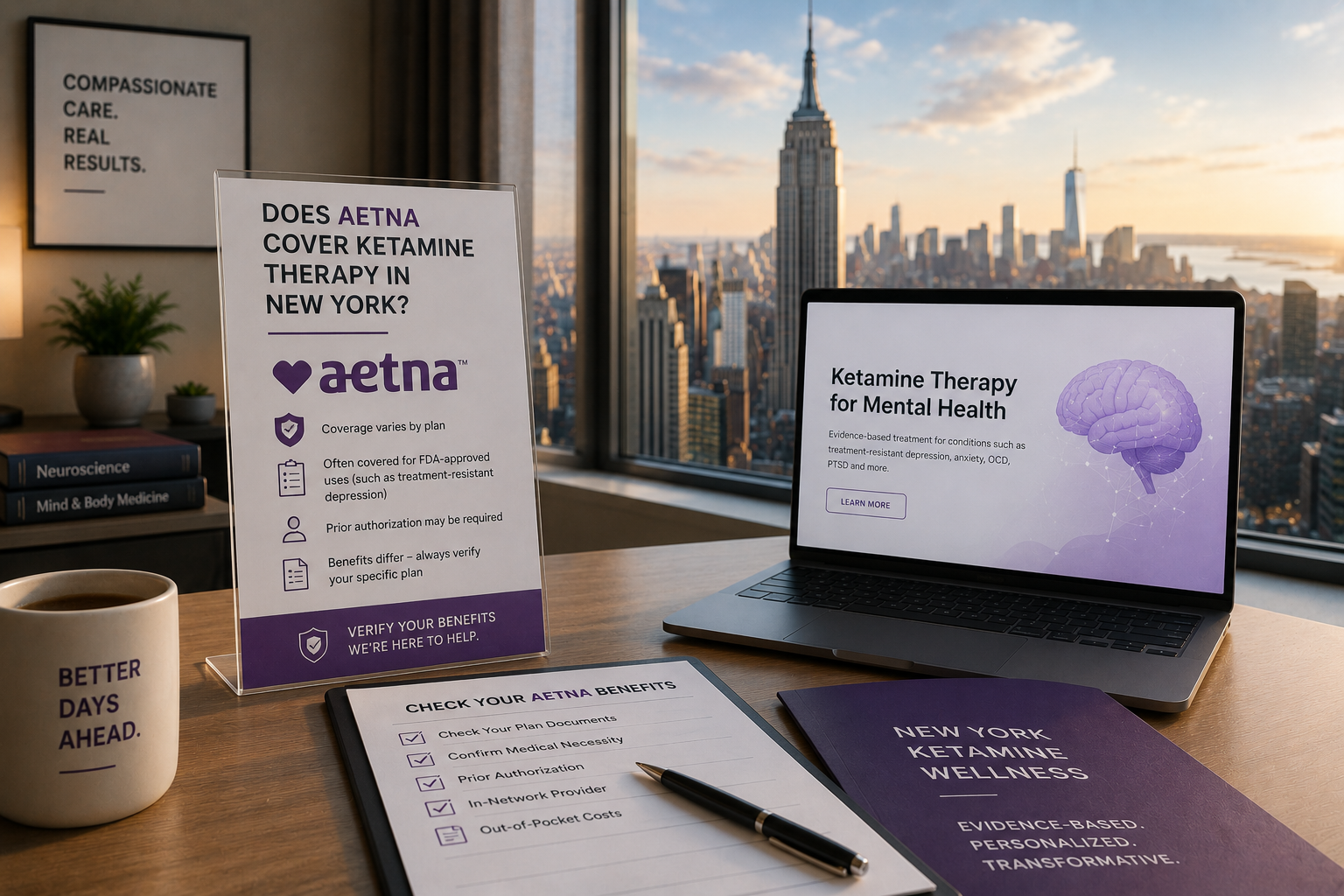
If you have an Aetna plan and you’re considering ketamine therapy for depression in New

Ketamine therapy, particularly in the form of intravenous (IV) infusions, has become a go-to treatment

Living in New York City often means paying a premium for everything, from rent to

For many individuals living with obsessive-compulsive disorder (OCD), the mind feels like a transmission with

Ketamine therapy is gaining popularity for its ability to alleviate severe depressive symptoms in hours

Finding affordable mental healthcare in New York can feel like navigating a maze, especially when

For many, therapy offers a vital path to healing and self-discovery. However, after years of
Thank you for choosing Wellness Clinic. Our specialist care team will contact you within the next 12 hours to confirm your appointment and answer any questions youmay have.
our team will review your message and contact your shortly. we look forward to supporting your wellness journey
Check your phone or email to receive your unique coupon code. You’ll need it when booking your first appointment.
 Optimized by Seraphinite Accelerator